- Talk: BlackHat Asia 2019: DevSecOps What Why and How
- Talk: BlackHat Asia 2019 Executive Summit: DevSecOps What Why and How
The video of the session is available now
The video of the session is available now
AI Generated Content Disclaimer
Note: This summary is AI-generated and may contain inaccuracies, errors, or omissions. If you spot any issues, please contact the site owner for corrections. Errors or omissions are unintended.
This presentation by Anant Shrivastava at BlackHat ASIA 2019 introduces DevSecOps — the practice of integrating security into DevOps pipelines to achieve “Secure by Default” outcomes. Delivered in a concise 25-slide format, the talk covers the what, why, and how of DevSecOps, walking through the concept of shifting security left in the development lifecycle, the specific tooling categories that can be automated within CI/CD pipelines, the cultural changes required to make DevSecOps successful, and real-world case studies demonstrating what happens when security is neglected. The presentation emphasizes that DevSecOps is not a one-size-fits-all solution and requires both automation and organizational culture shifts.
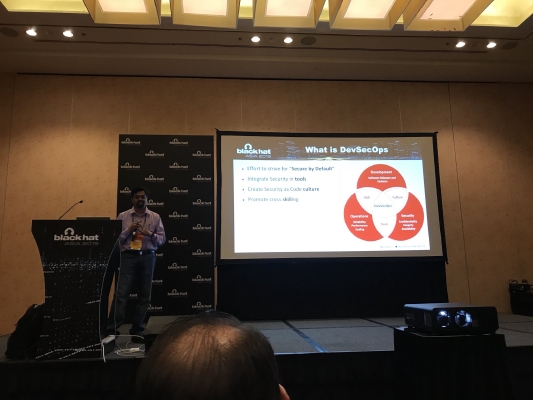
What is DevSecOps: An effort to strive for “Secure by Default” by integrating security into tools, creating a Security as Code culture, and promoting cross-skilling across development, operations, and security teams.
Why DevSecOps is Needed: Traditional security cannot keep pace with modern DevOps velocity. Security must be embedded as part of the process to ensure safety. The “shift left” concept demonstrates that finding a vulnerability (e.g., SQL injection) earlier in the pipeline requires fewer man-day effort, no new deployments, and can be caught by automated source code review.
DevSecOps Pipeline Stages: The presentation maps security controls across the entire pipeline:
Tools of the Trade: Categories and specific tools mentioned include:
Tool Selection Criteria: For a tool to belong in the pipeline it must have API/command-line access, complete execution within 15 minutes maximum, be containerizable/scriptable, have minimal licensing limitations, produce machine-readable output (JSON/XML, not stdout), and be configurable to manage false positives and false negatives.
Cloud Security Considerations: The threat landscape changes in cloud environments with new concerns around Identity and Access Management, billing attacks, security groups, permissions to resources, rogue/shadow admins, and forgotten resources that can lead to compromises or unexpected billing.
Cultural Aspect and Security Champions: Automation alone will not solve problems. Organizations need to foster collaboration and an inclusive culture, encourage security mindset outside the security team, build security champions (one per team) who bridge Dev, Sec, and Ops, incentivize collaboration through internal bug bounties and sponsored cross-skilling trainings, and avoid the blame game.
Case Studies: Four real-world scenarios illustrating security failures:
Beyond DevSecOps: Periodic penetration testing and continuous bug bounty programs remain essential. Organizations should act on feedback, and risk acceptance documentation should represent the worst-case scenario rather than being the first resort.