The Breach Is Over. The Exposure Is Not - Recon Village @ DEF CON 34
AI Generated Summary
AI Generated Content Disclaimer
Note: This summary is AI-generated and may contain inaccuracies, errors, or omissions. If you spot any issues, please contact the site owner for corrections. Errors or omissions are unintended.
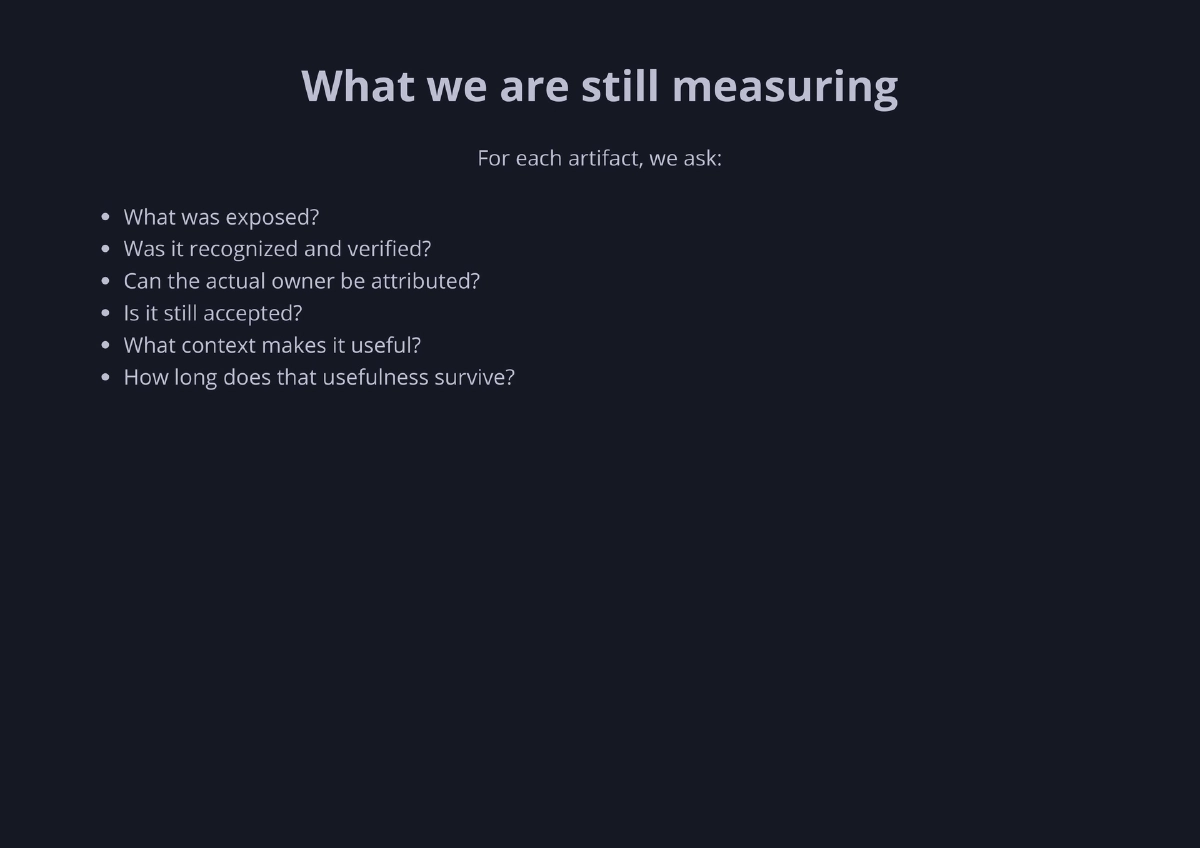
The Breach Is Over. The Exposure Is Not. was presented at Recon Village @ DEF CON 34 on the Creator Stage in Las Vegas on 8 August 2026, with the deck crediting Anant Shrivastava (Cyfinoid Research) and Kumar Ashwin (RedHunt Labs). Across 48 slides it treats the two Shai-Hulud npm worm campaigns as an unfinished measurement problem: which credentials stayed usable after the incidents were declared closed, which secret classes linger in the long tail, and how contextual residue such as secret names, repository paths, and service identifiers becomes durable reconnaissance intelligence.
Summary
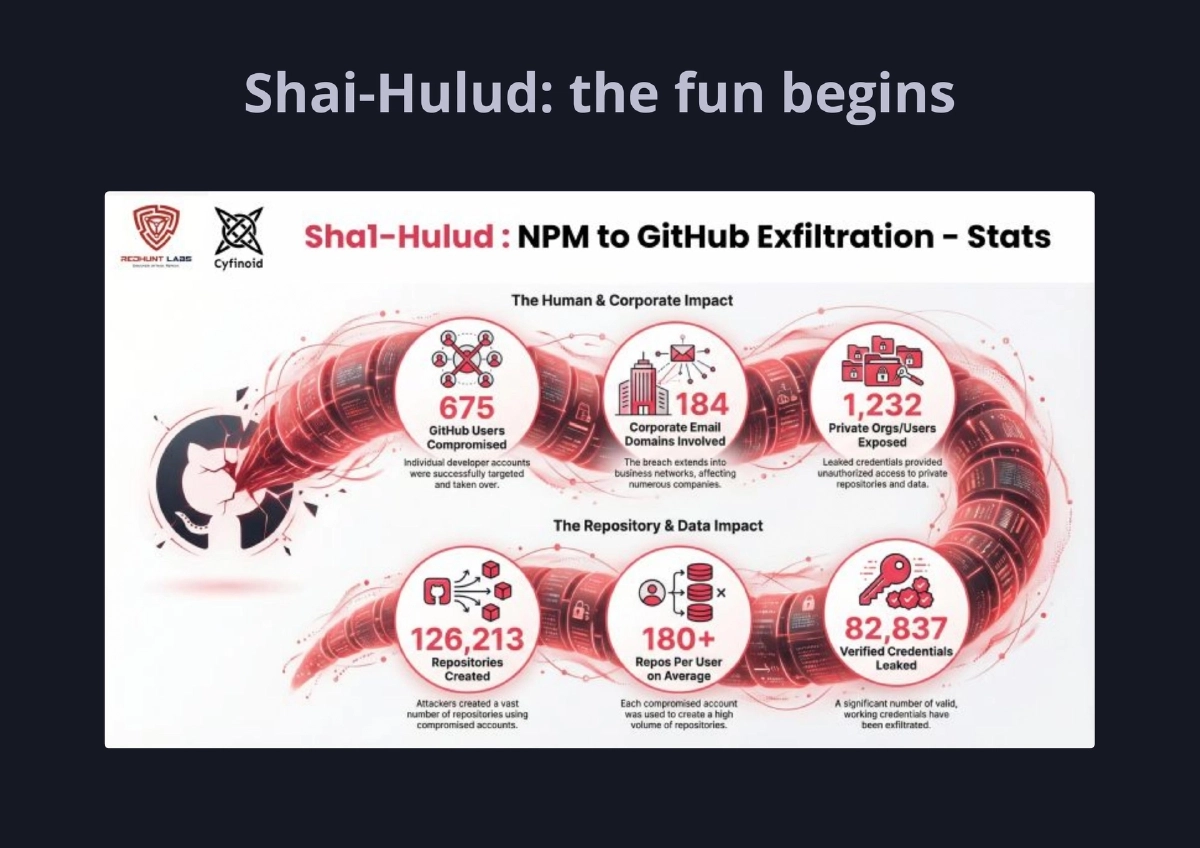
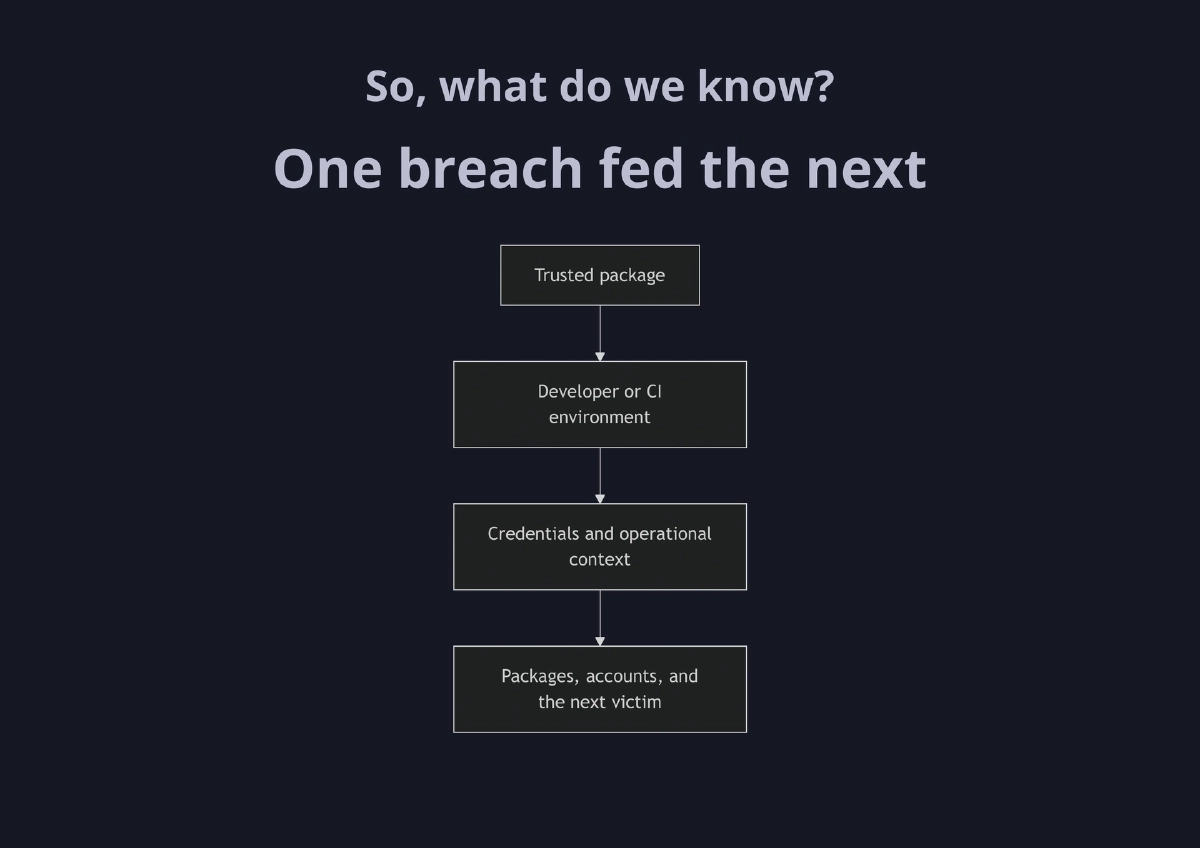
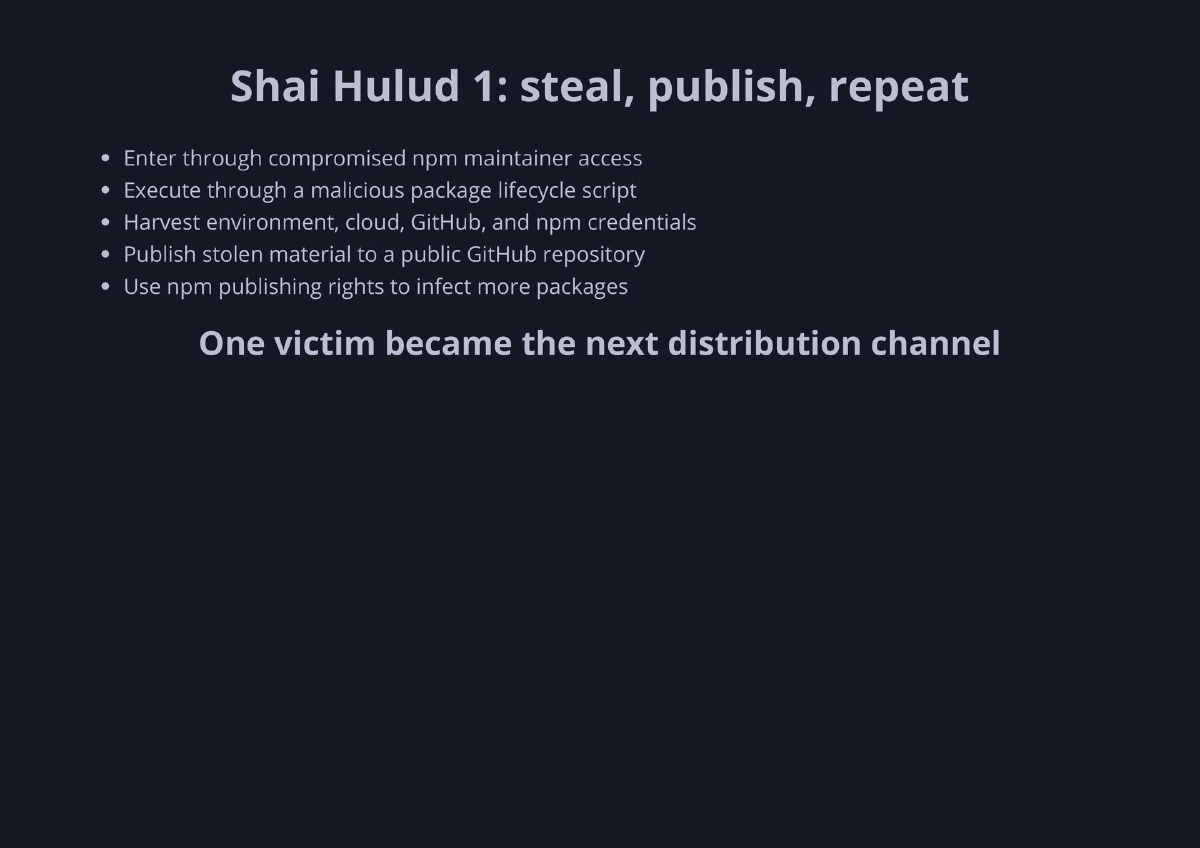
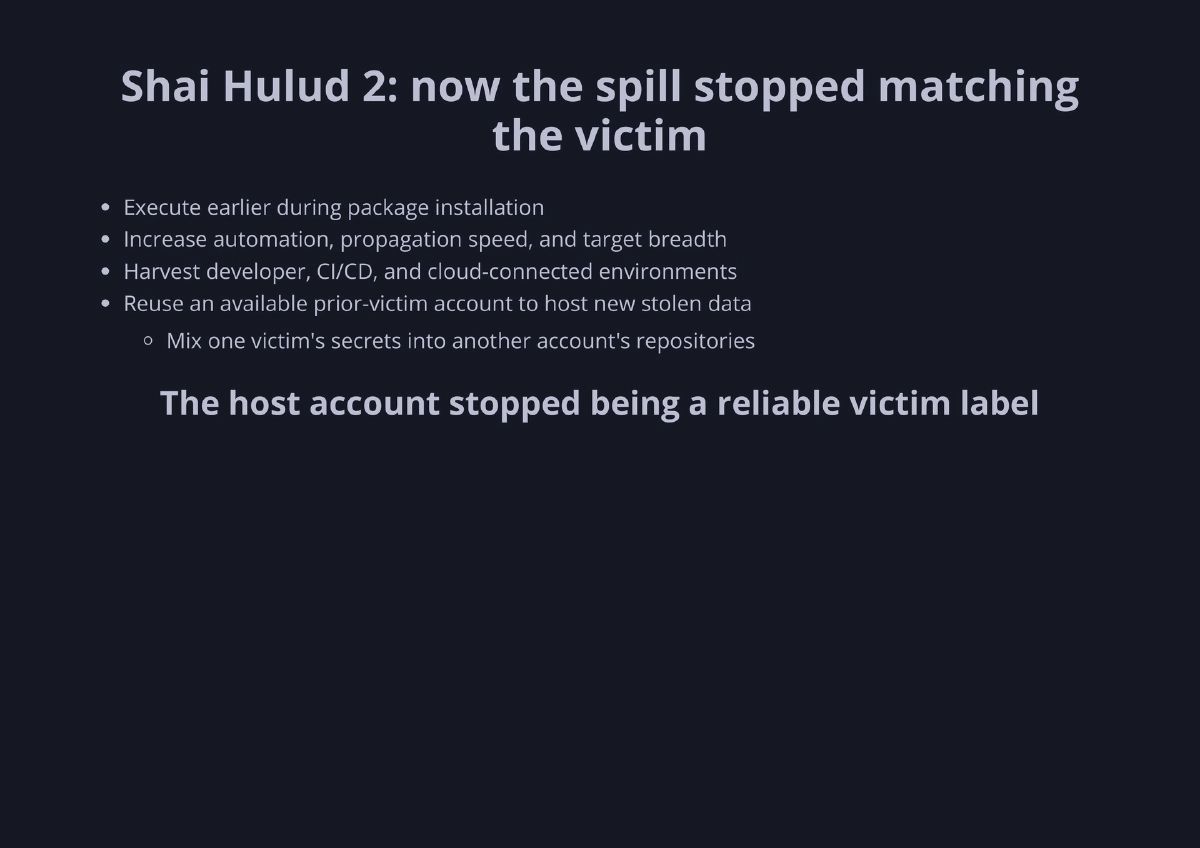
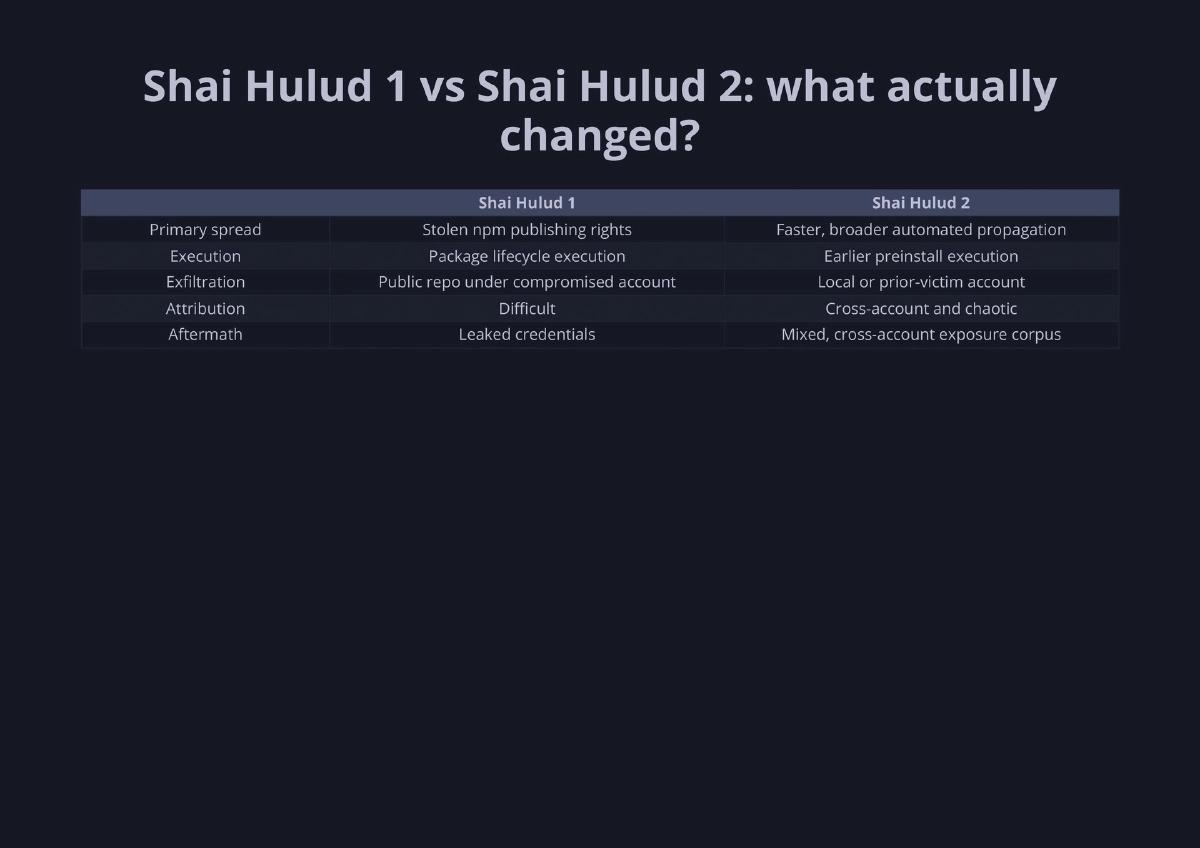
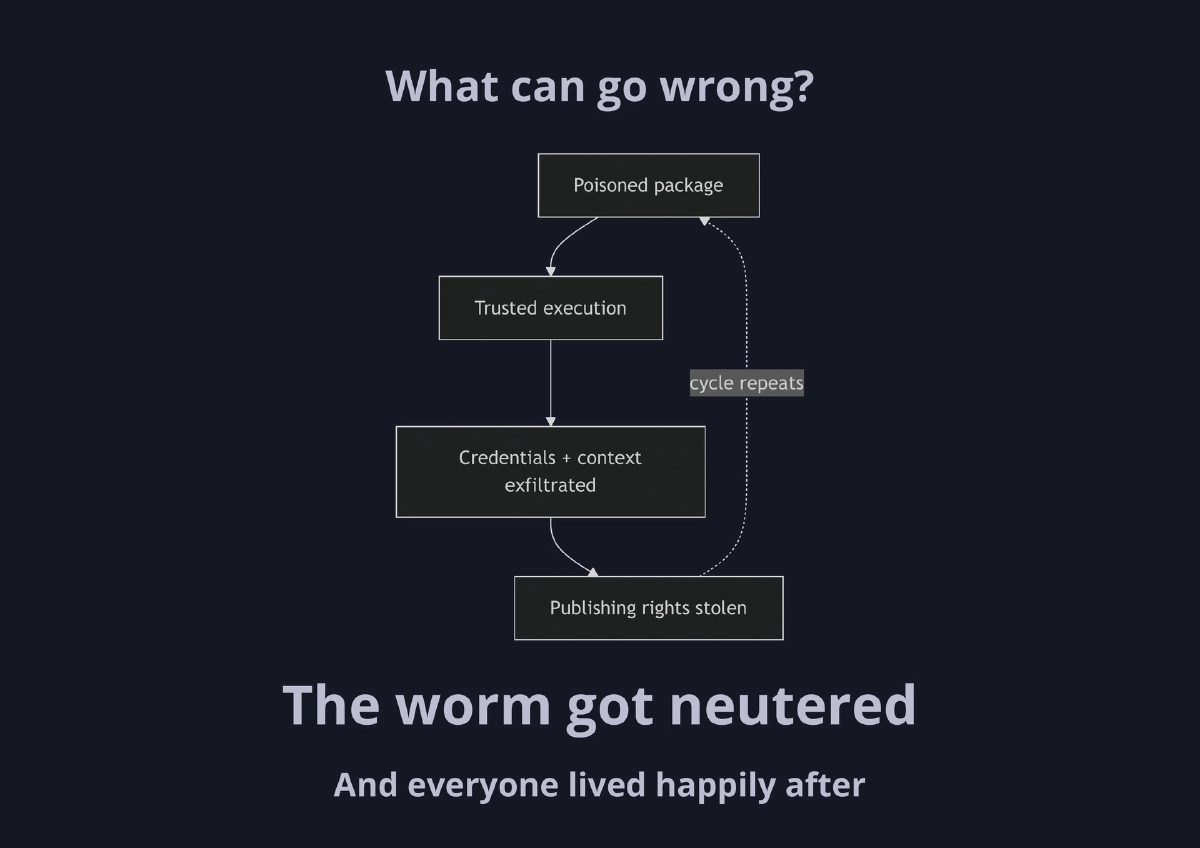
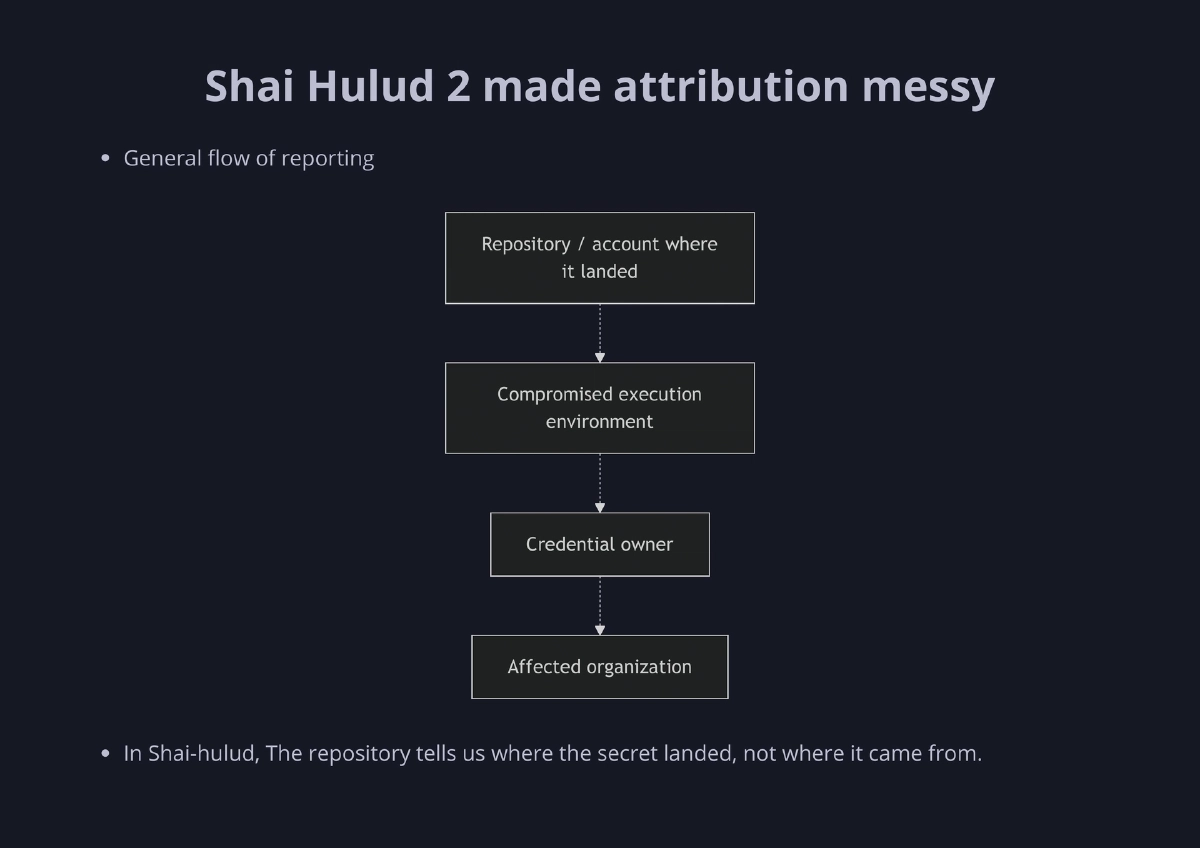
The deck reopens a closed incident. Shai Hulud 1 entered through compromised npm maintainer access, ran a malicious package lifecycle script, harvested environment, cloud, GitHub, and npm credentials, and published stolen material to a public GitHub repository, making one victim the next distribution channel. Shai Hulud 2 executed earlier during package installation, automated propagation, harvested developer and CI/CD and cloud-connected environments, and reused a prior-victim account to host new stolen data, mixing victims’ secrets across accounts. A comparison table marks attribution difficult in wave one and cross-account and chaotic in wave two, and then the deck plants its premise: the worm got neutered.
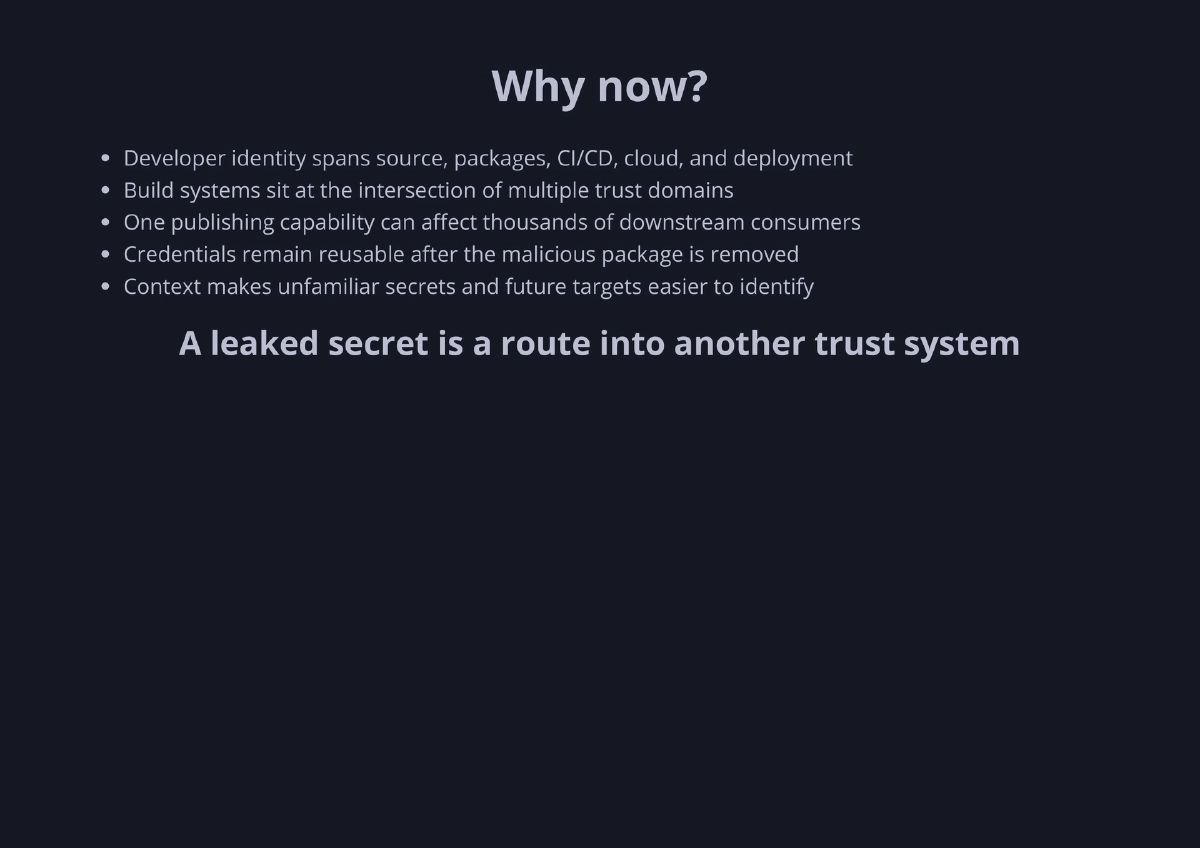
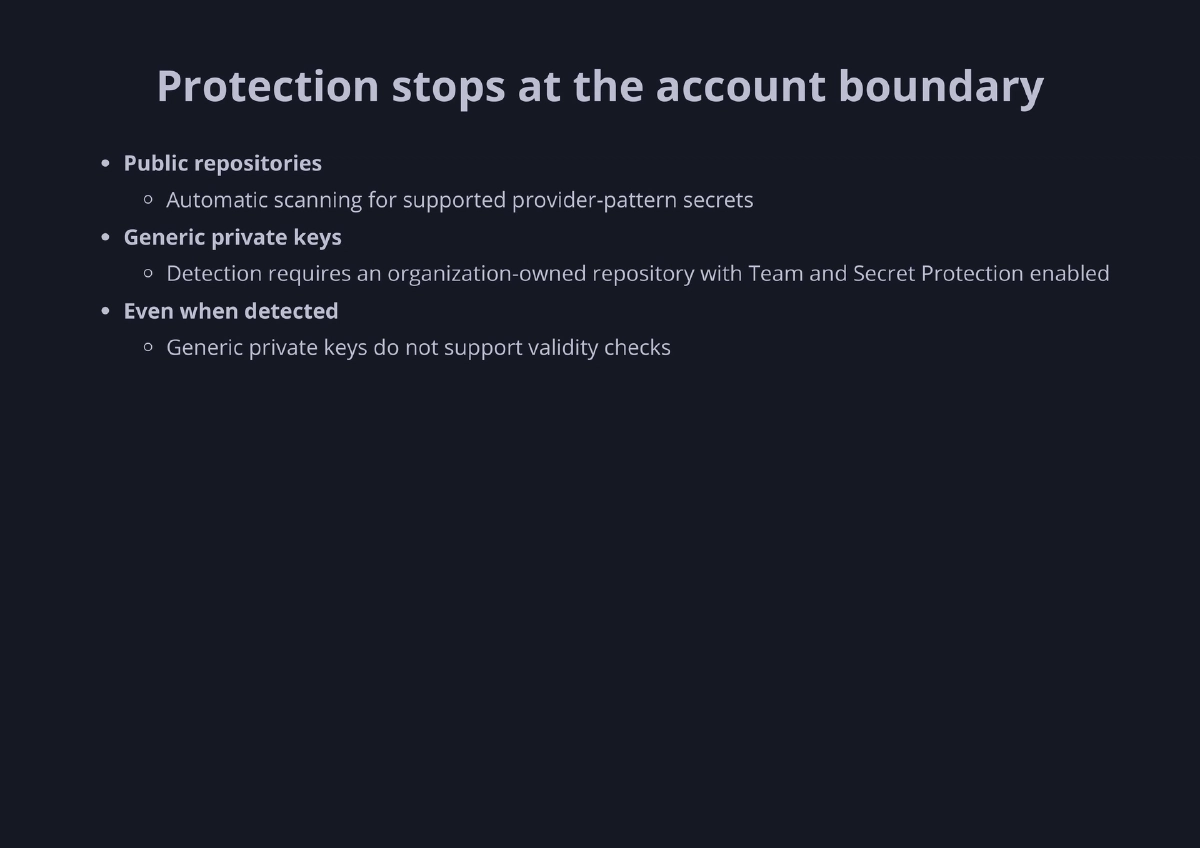
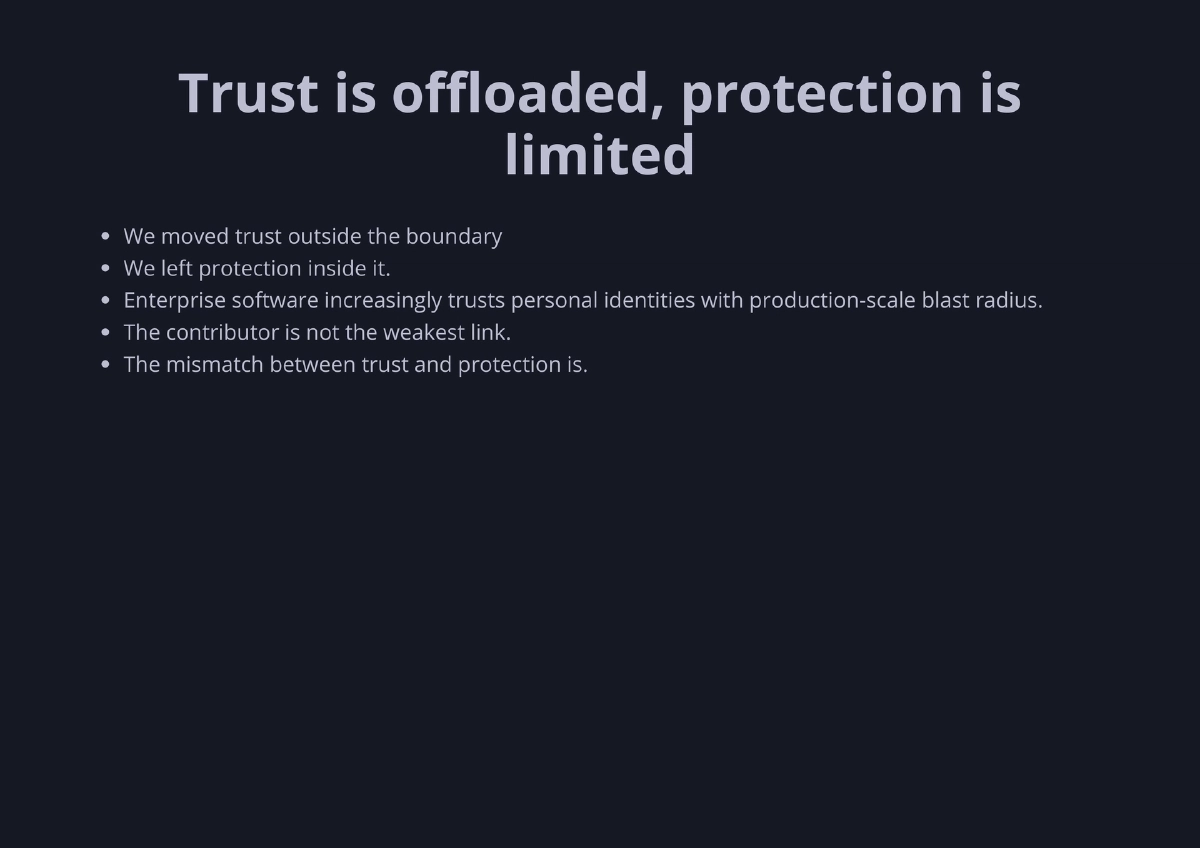
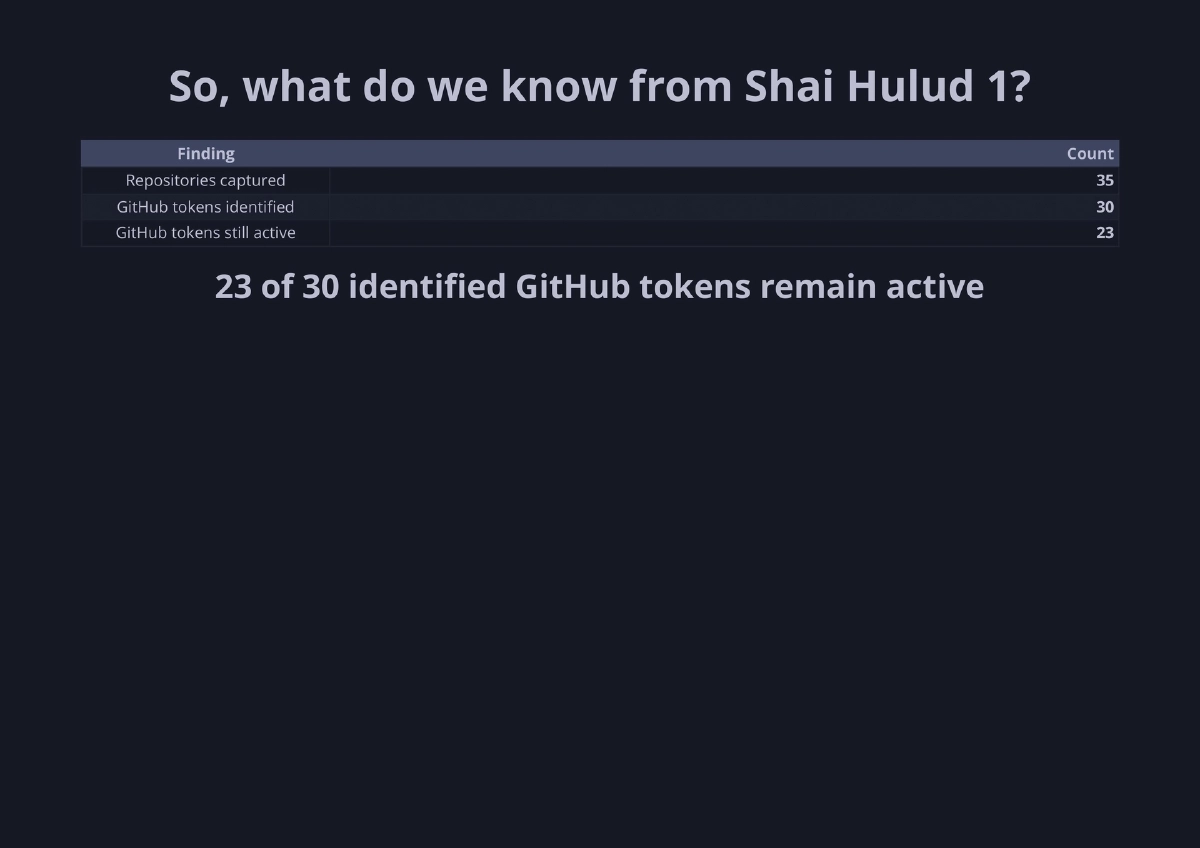
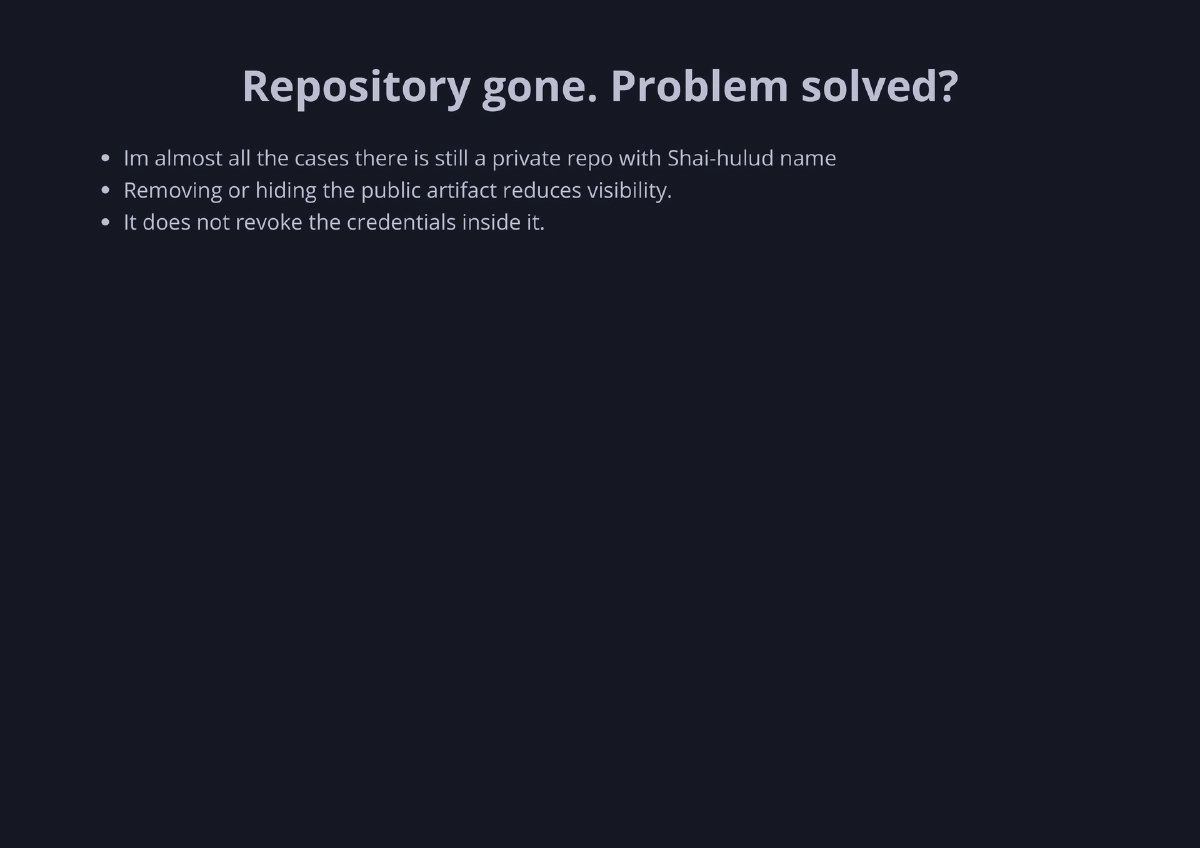
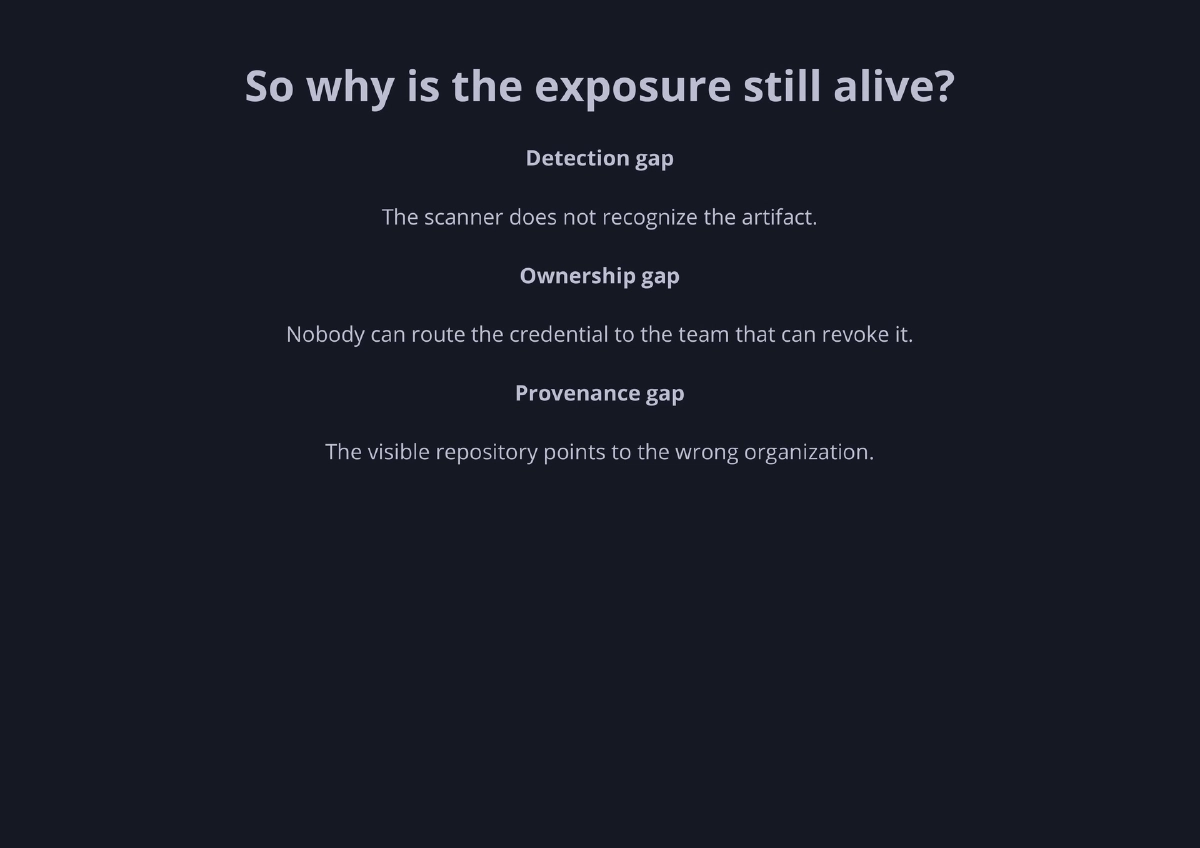
What follows is the case that closure changed nothing important. Developer identity now spans source, packages, CI/CD, cloud, and deployment, so trust moved outside the boundary while protection stayed inside it: scanning covers provider-pattern secrets in public repositories, while generic private keys need an organization-owned repository with secret protection and support no validity checks. In the Shai Hulud 1 corpus, 35 repositories yielded 30 GitHub tokens and 23 remained active, and in almost all cases a private Shai-hulud repository still existed, because hiding the public artifact does not revoke the credentials inside it. Wave two made attribution worse, the repository telling where a secret landed, not where it came from, and detection, ownership, and provenance gaps keep the exposure alive.
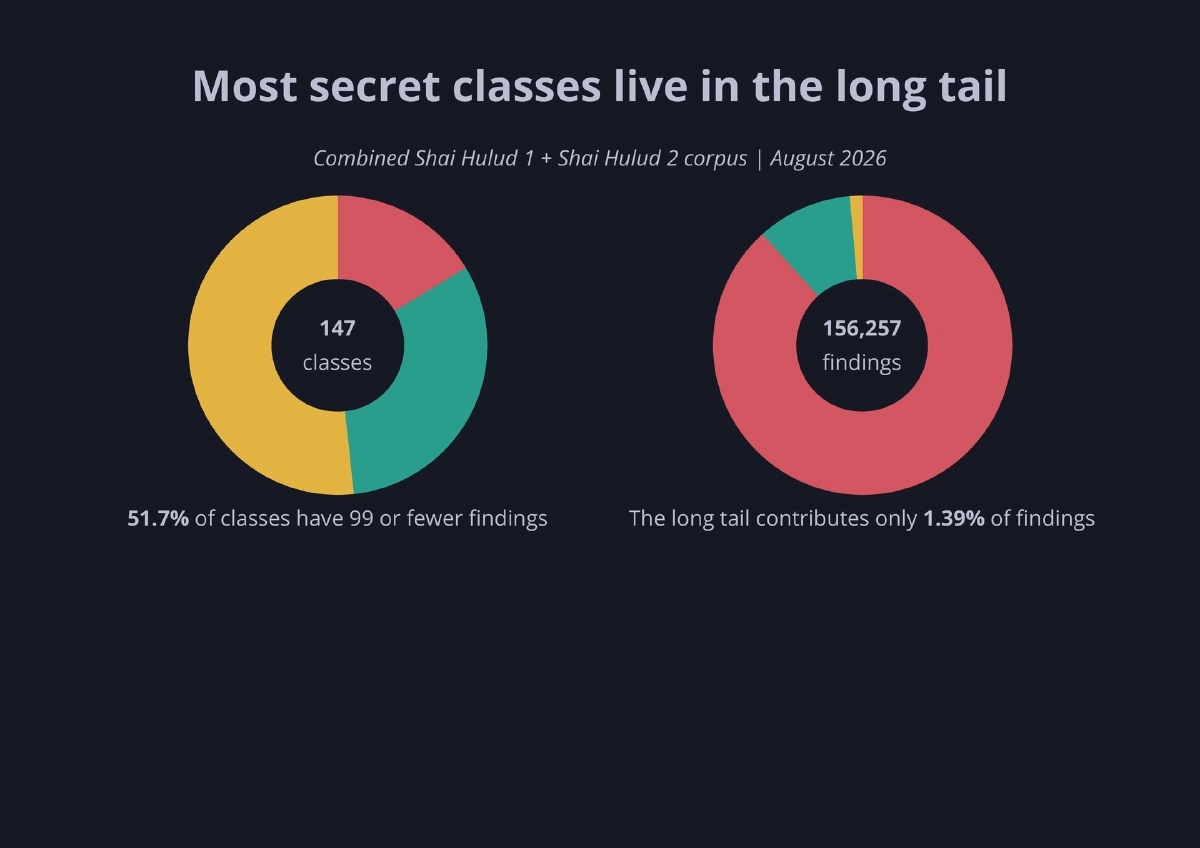
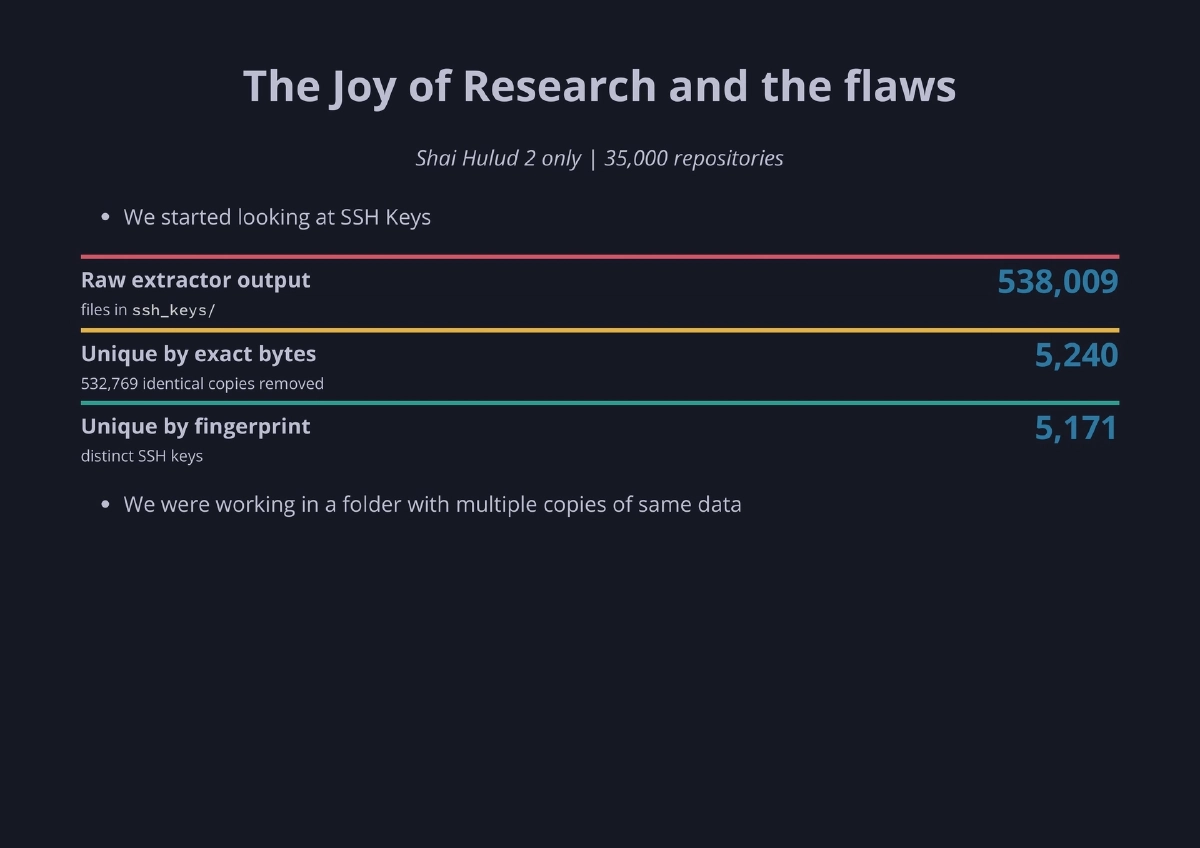
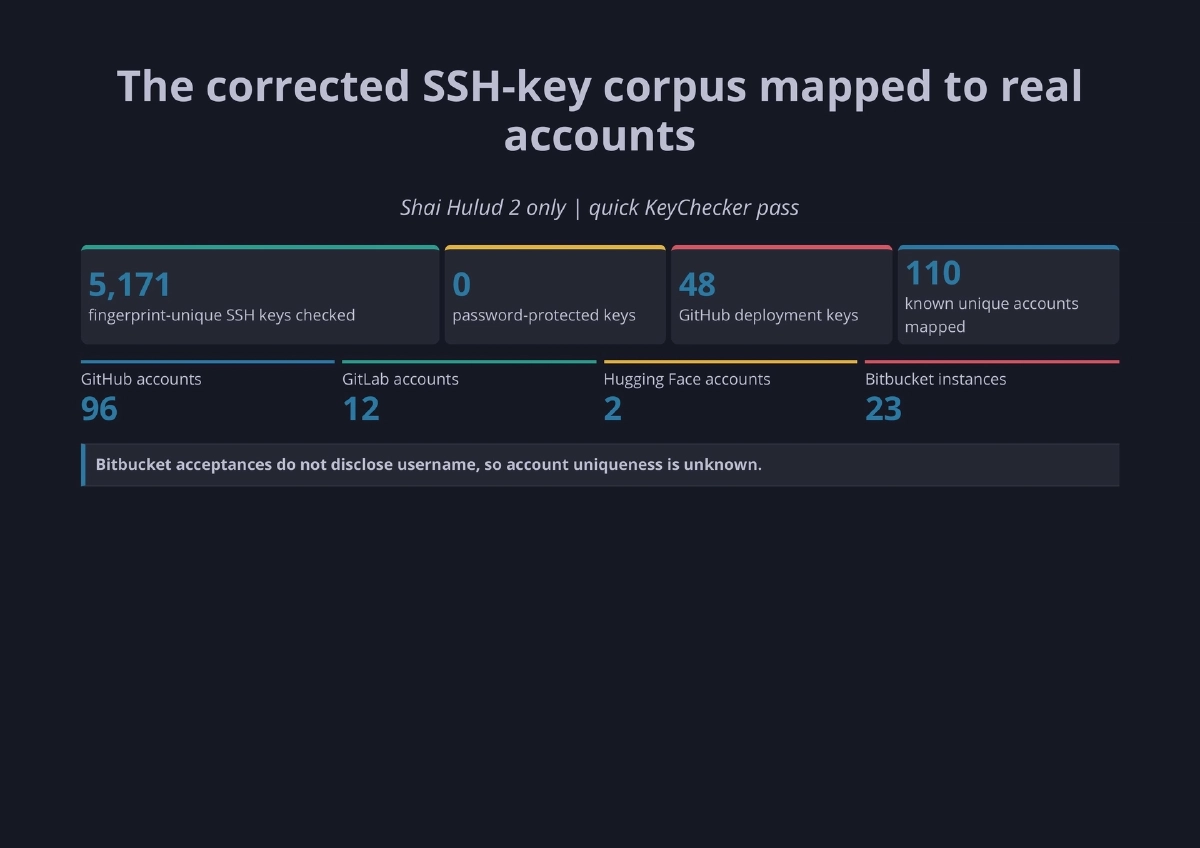
Corpus statistics give the tail its shape: 147 secret classes and 156,257 findings across the combined waves, with 51.7% of classes holding 99 or fewer findings and the long tail contributing just 1.39% of the total. SSH keys get their own audit. Raw output of 538,009 files collapsed to 5,240 unique by exact bytes, 532,769 identical copies removed, and 5,171 distinct by fingerprint, a correction the deck labels the joy of research and the flaws. A KeyChecker pass mapped the fingerprint-unique keys to real accounts: 96 GitHub accounts, 12 GitLab accounts, 2 Hugging Face accounts, 48 GitHub deployment keys, zero password-protected keys, and 110 known unique accounts.
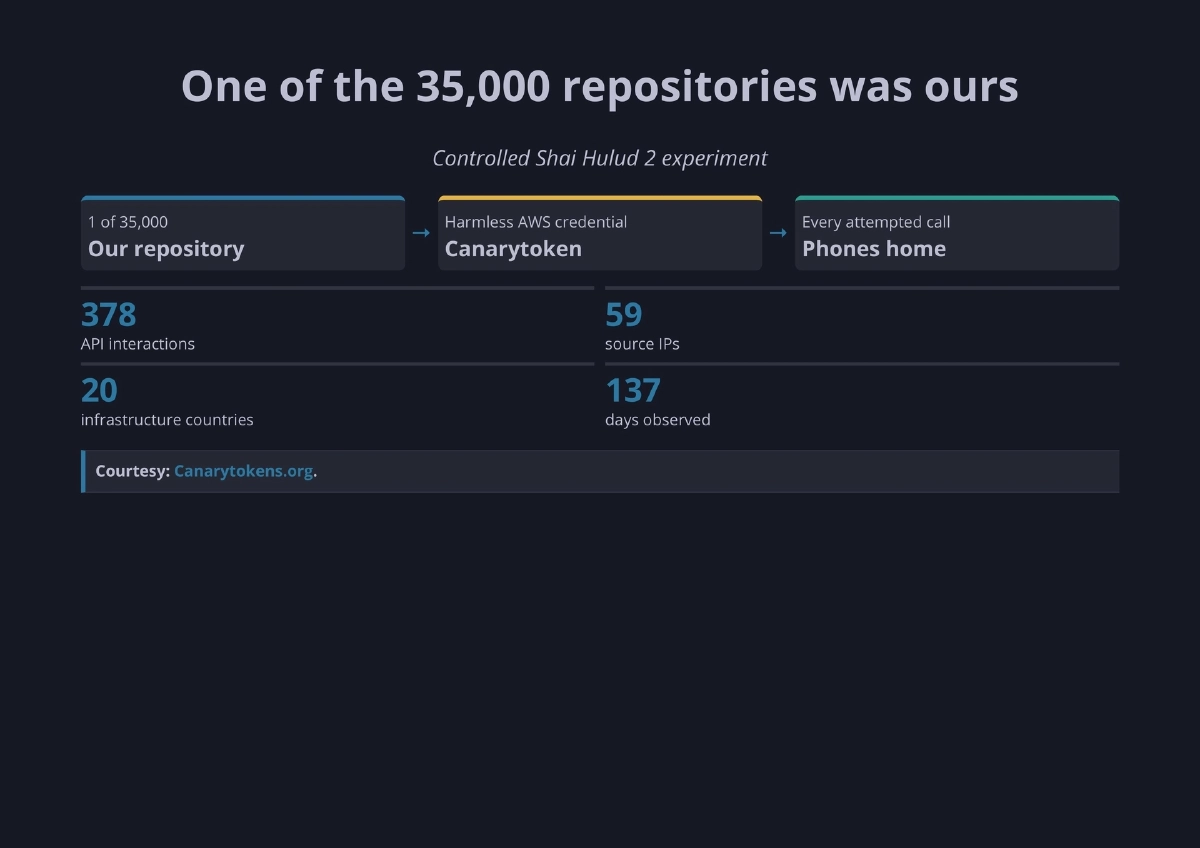
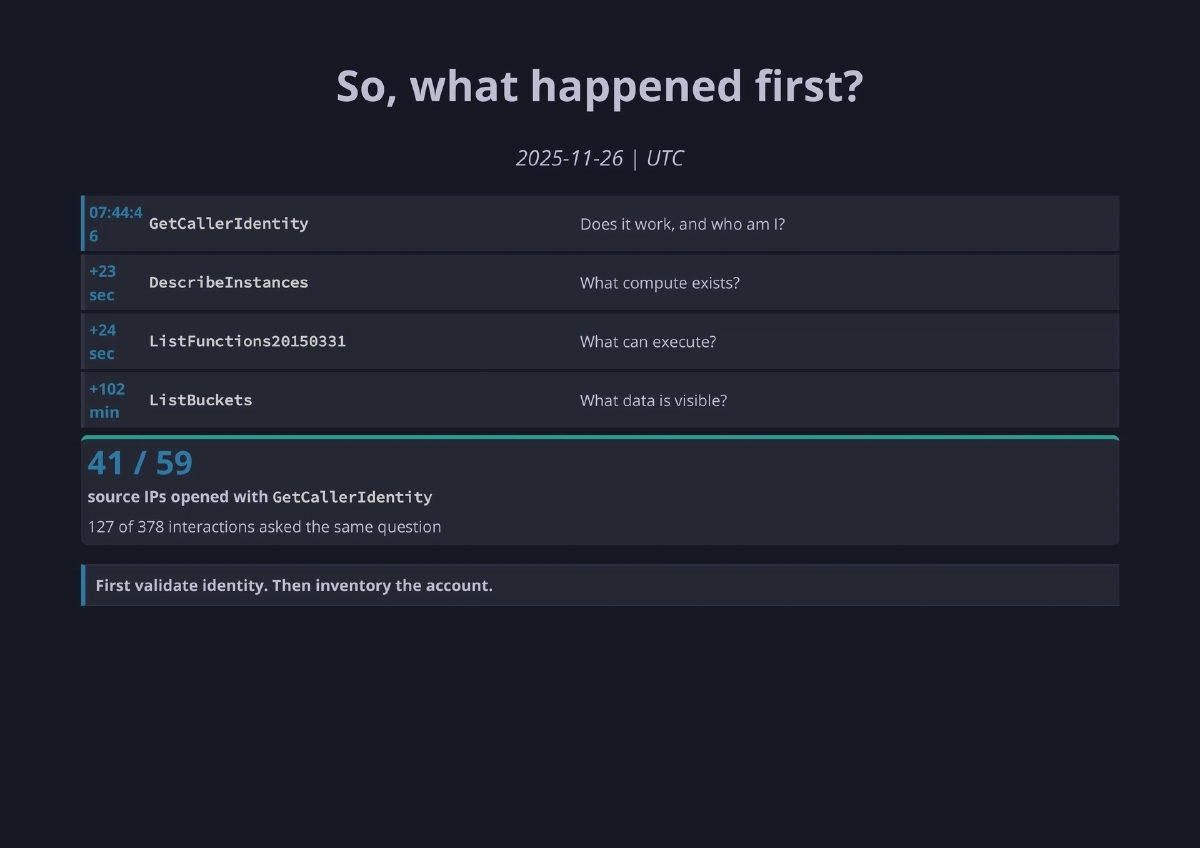
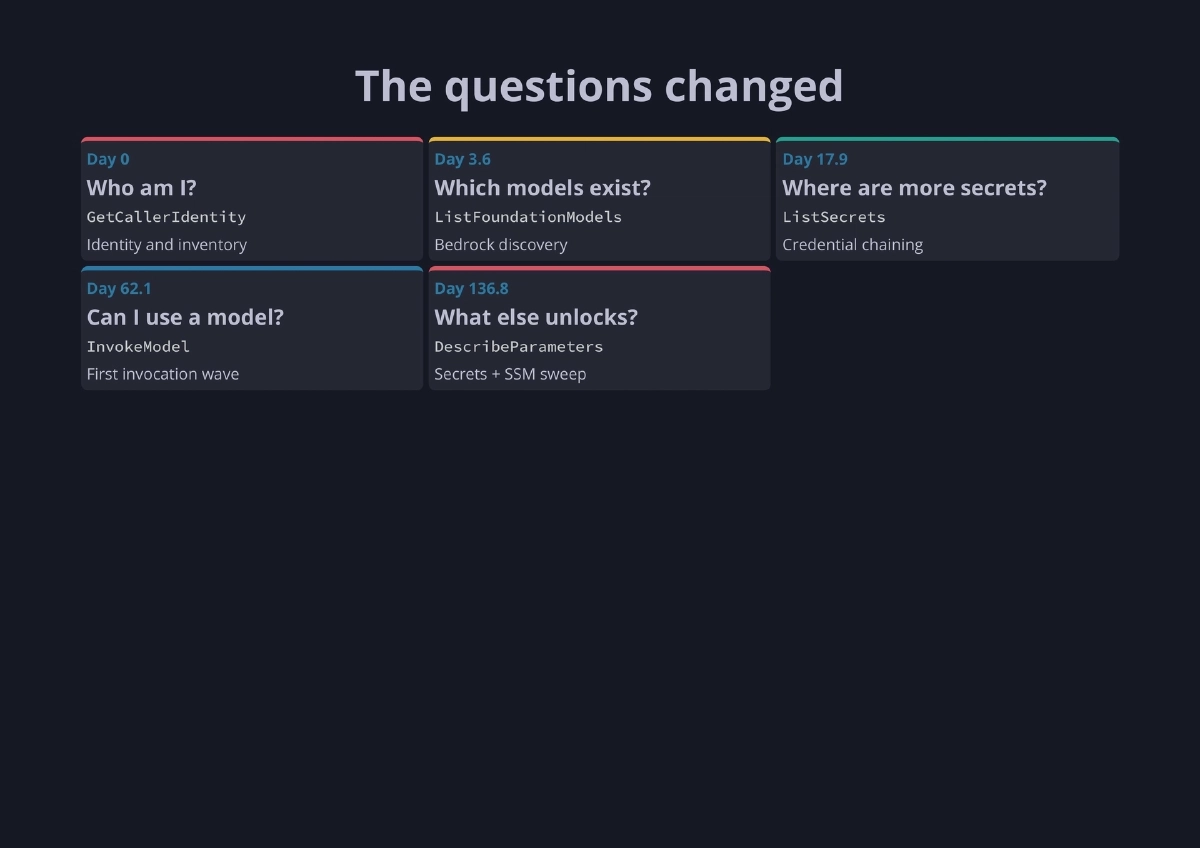
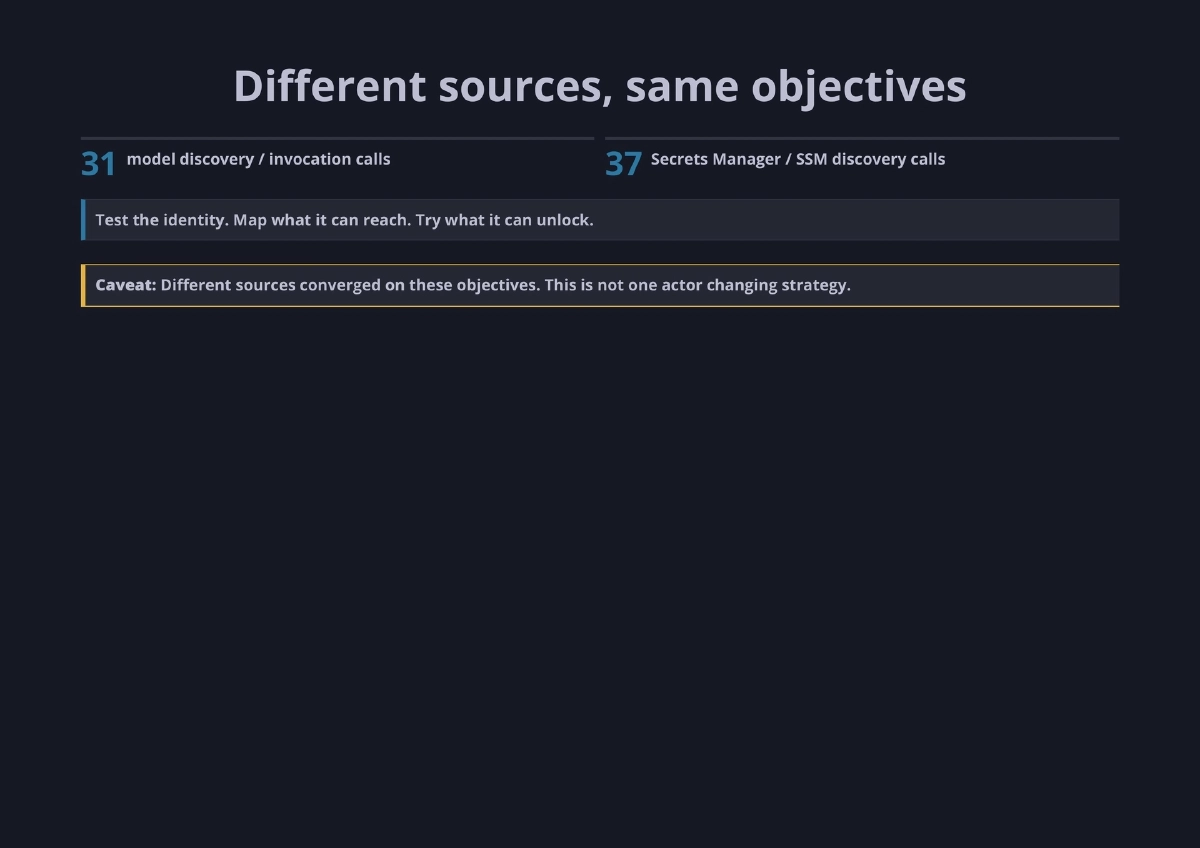
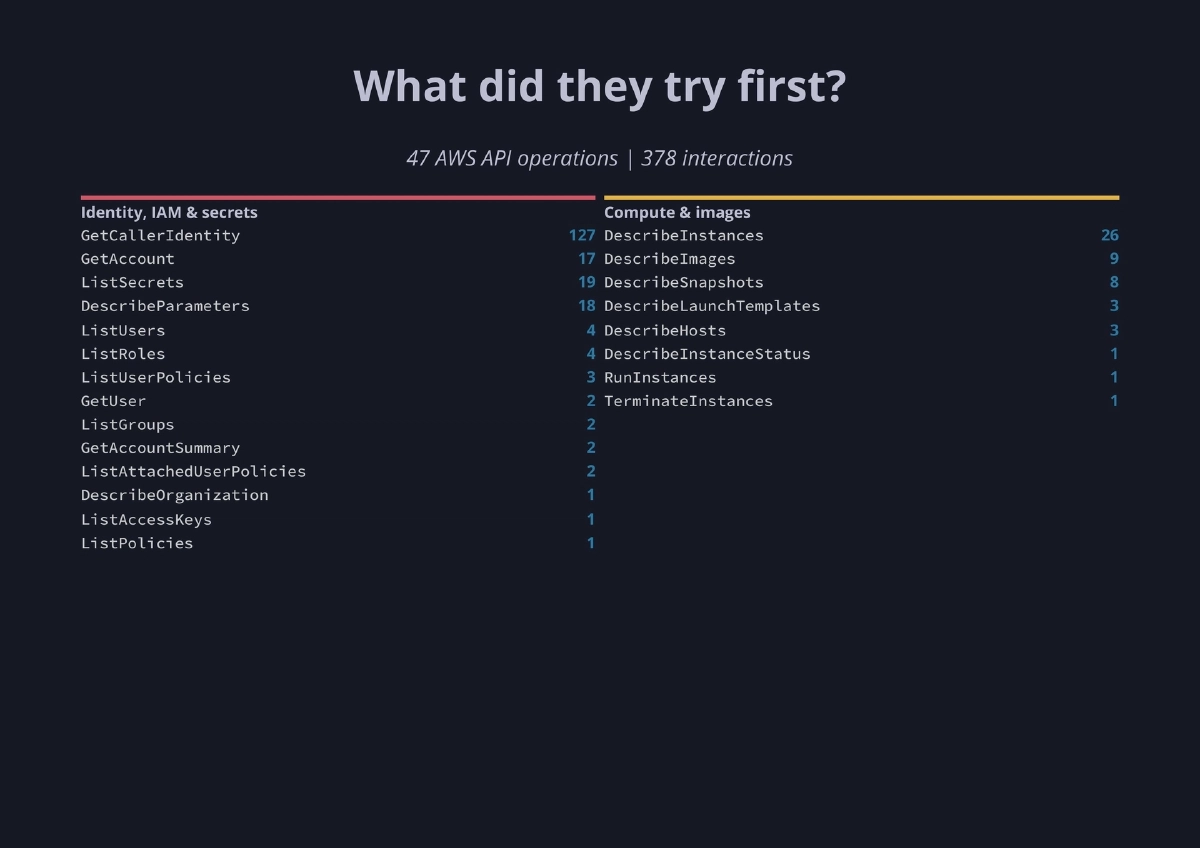
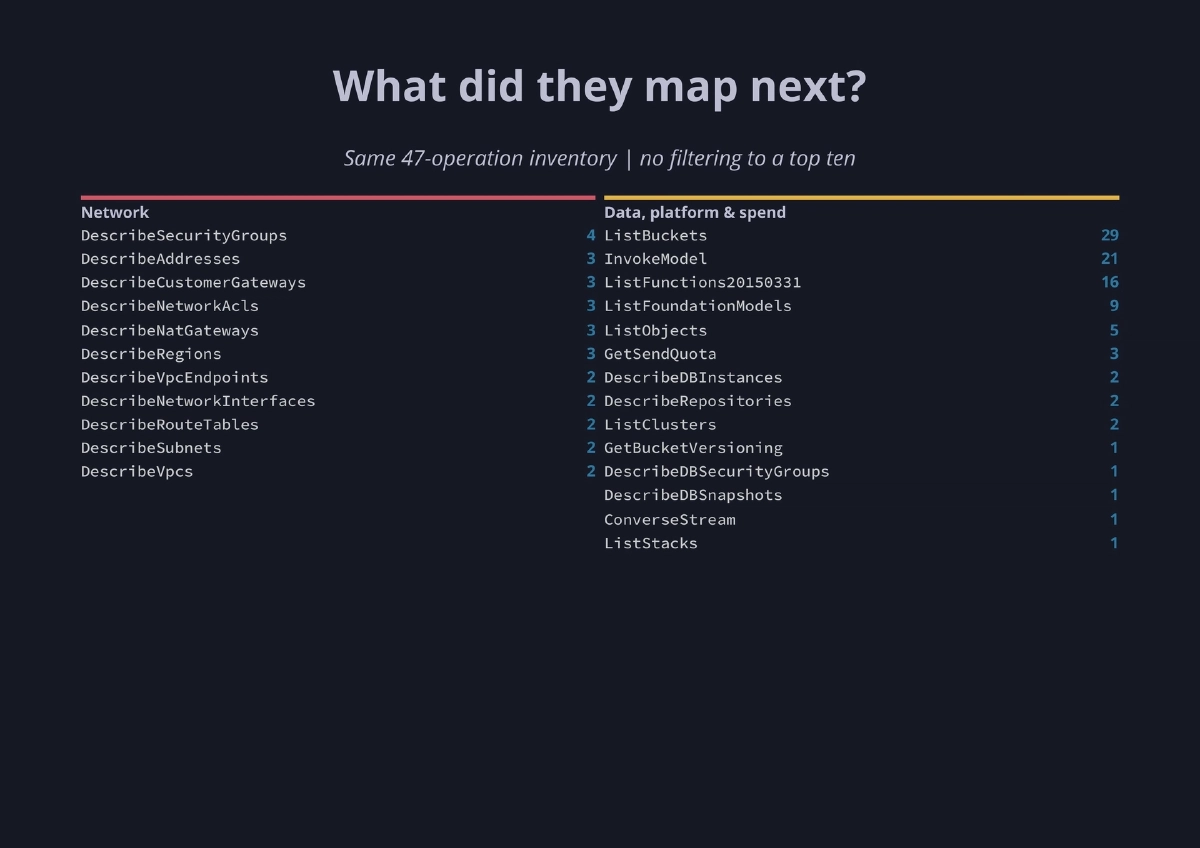
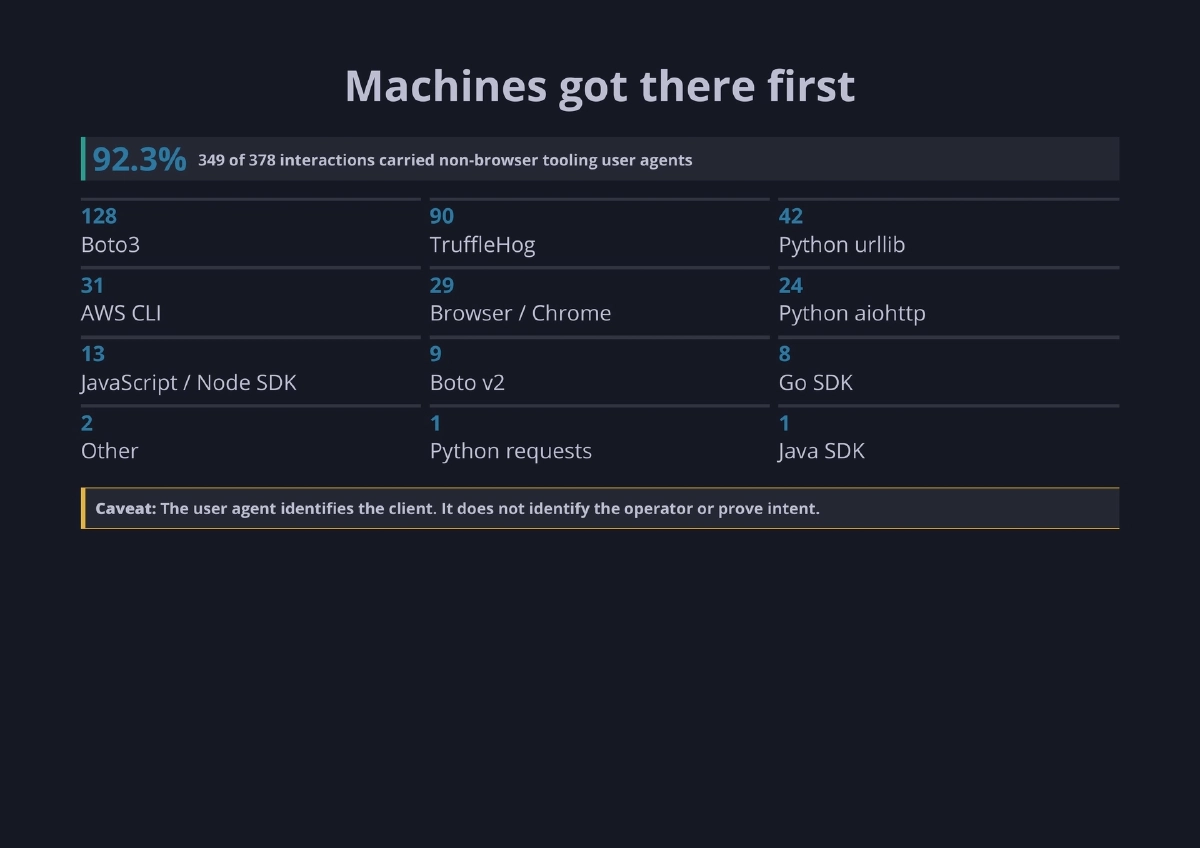
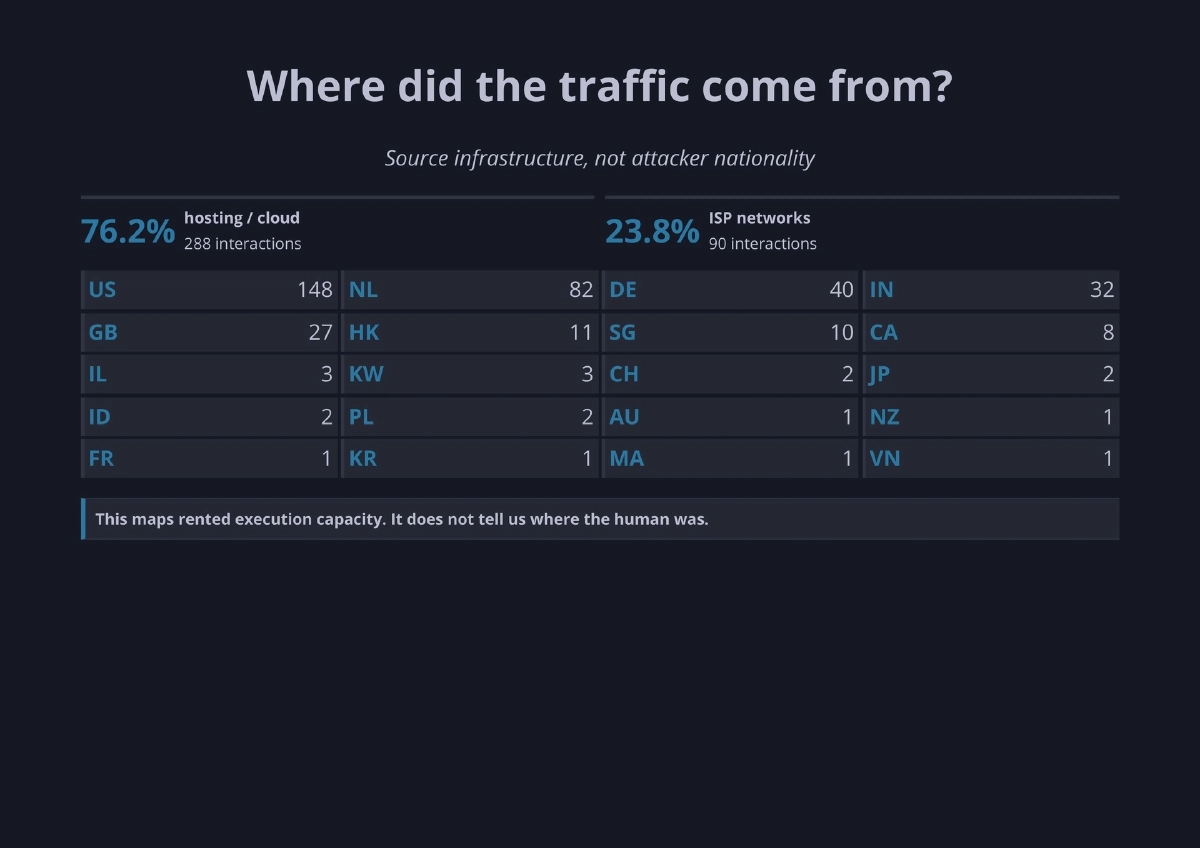
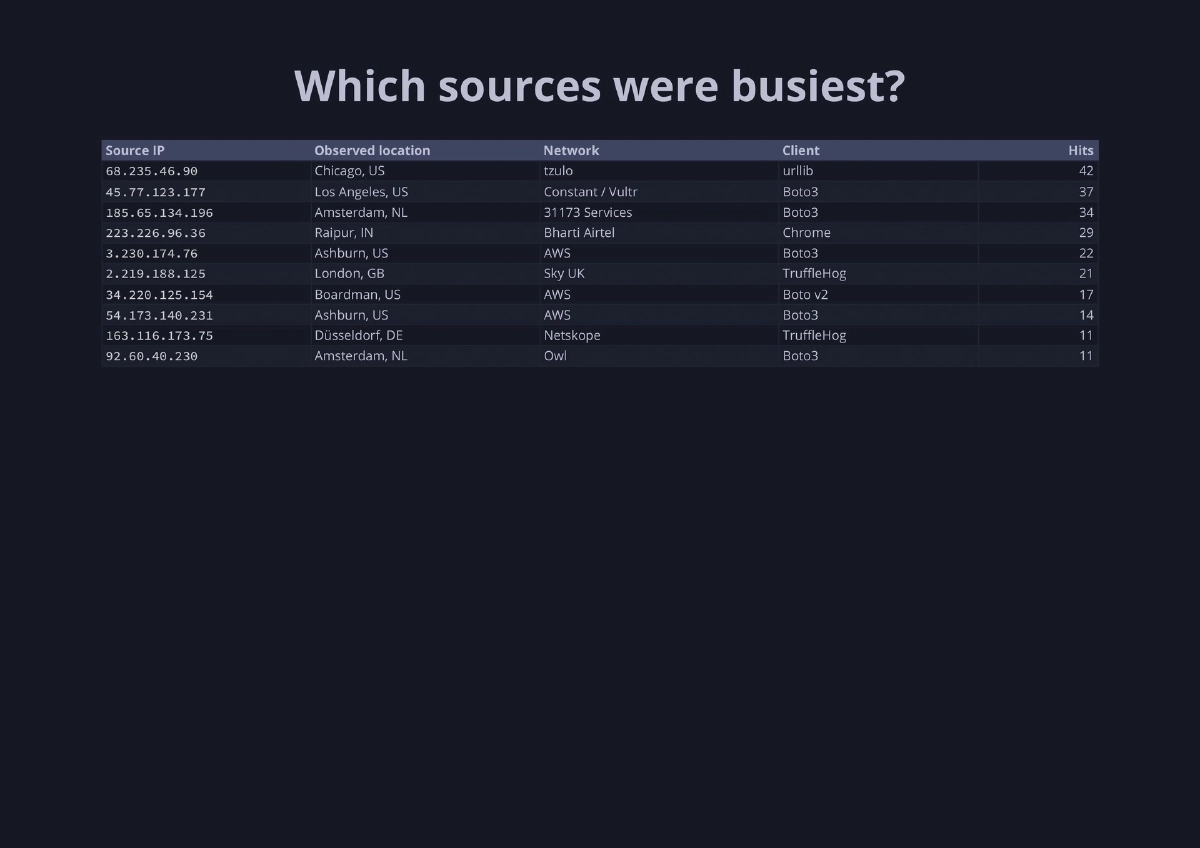
The canary experiment made harvesting measurable: one repository among the 35,000 carried a harmless AWS credential that phones home on every attempted call, logging 378 API interactions from 59 source IPs across 20 infrastructure countries over 137 observed days. The opening calls on 2025-11-26 ran GetCallerIdentity, then DescribeInstances at 23 seconds, ListFunctions at 24 seconds, and ListBuckets at 102 minutes; 41 of 59 source IPs opened with the identity check and 127 of 378 interactions asked the same question. The questions shifted over the window, from identity and inventory on day 0 through Bedrock discovery, credential chaining, and a first InvokeModel wave to a secrets plus SSM sweep by day 136.8. Machines dominated: 92.3% of interactions carried non-browser tooling, led by Boto3 and TruffleHog, and 76.2% of traffic came from hosting or cloud networks, rented execution capacity rather than attacker nationality.
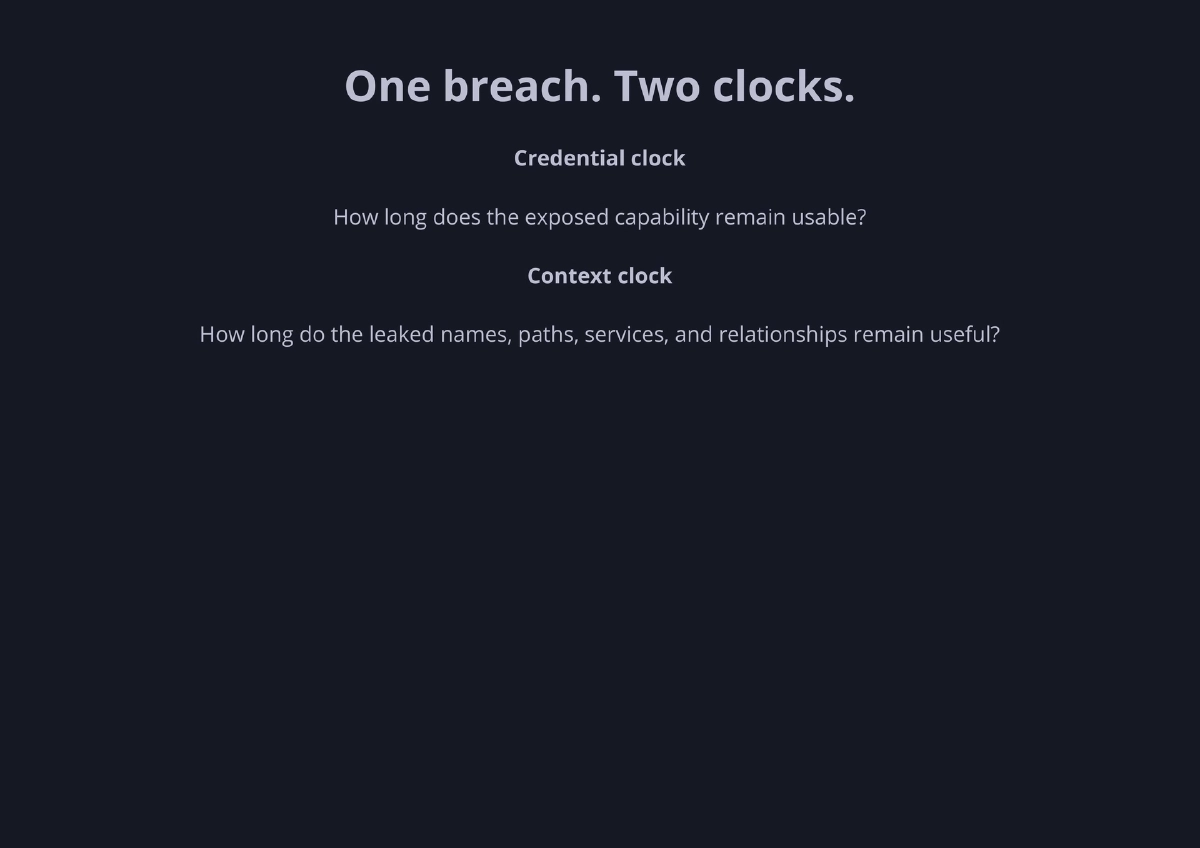
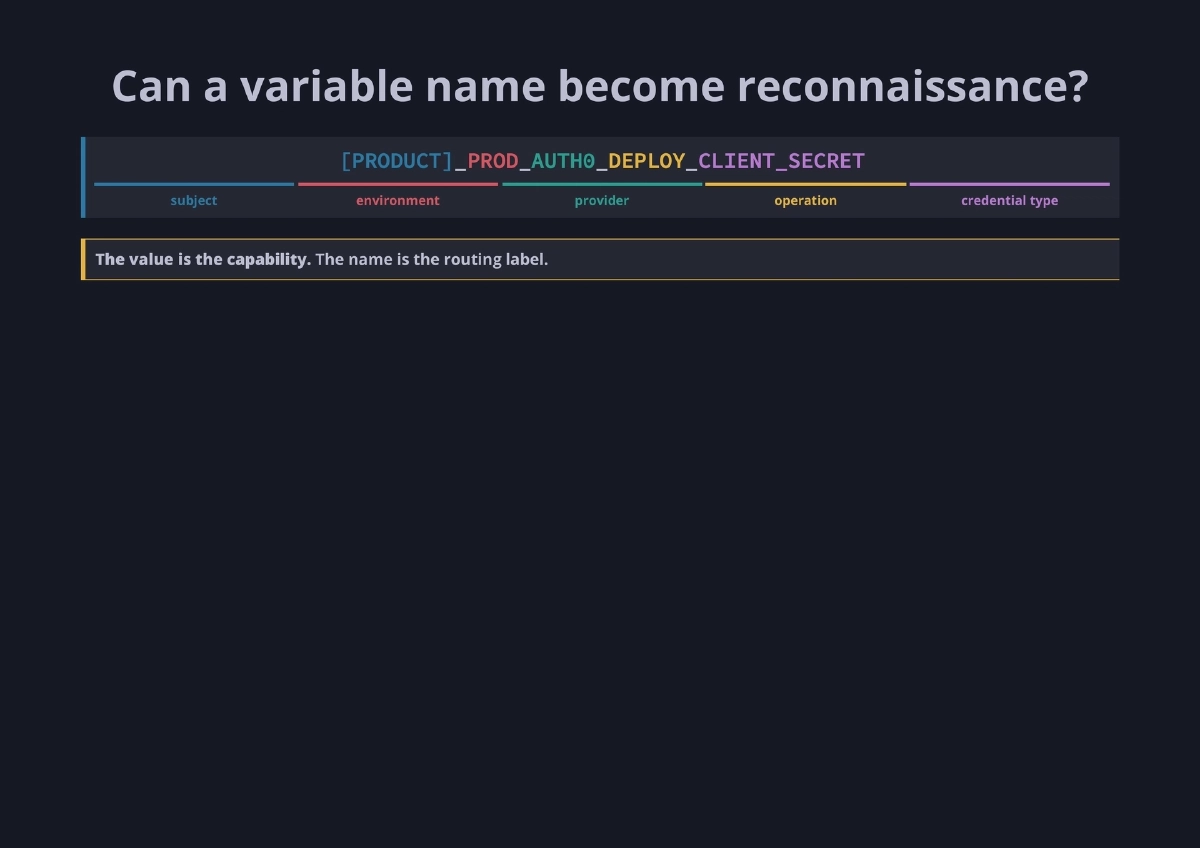
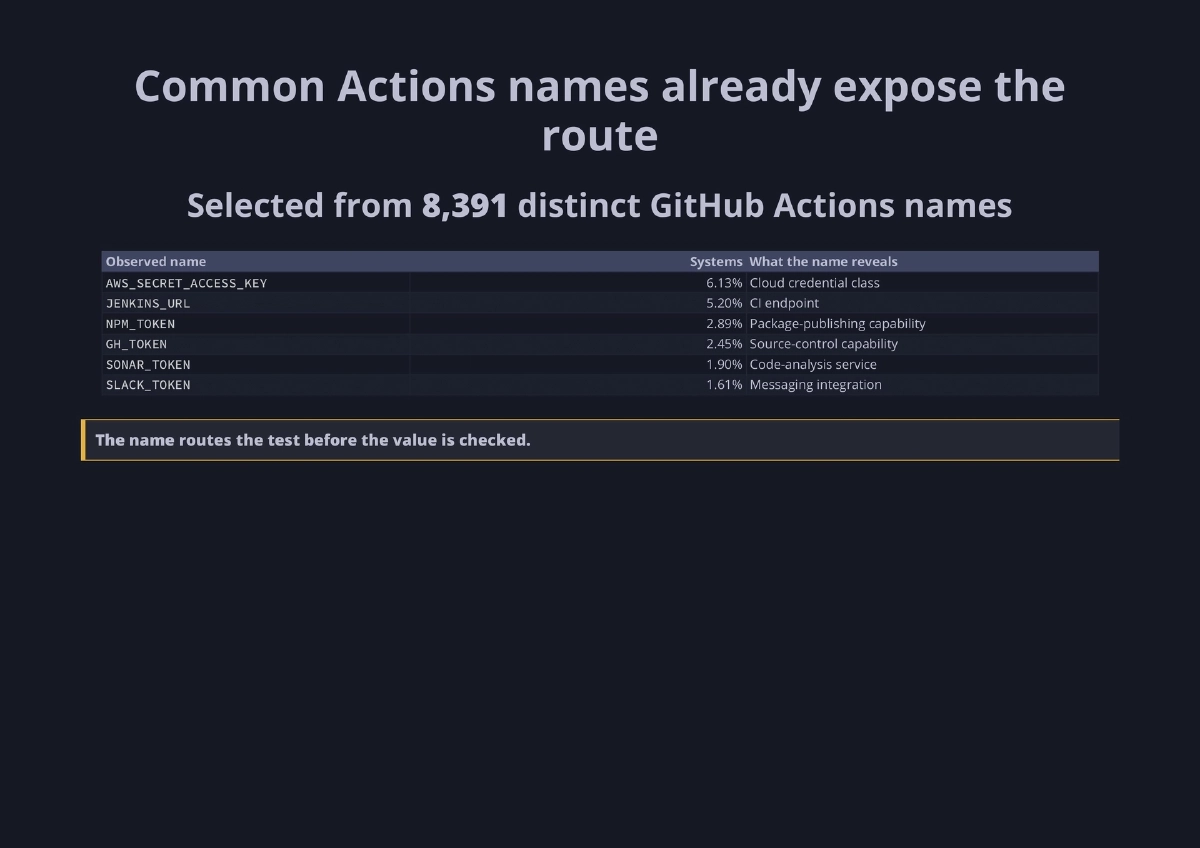
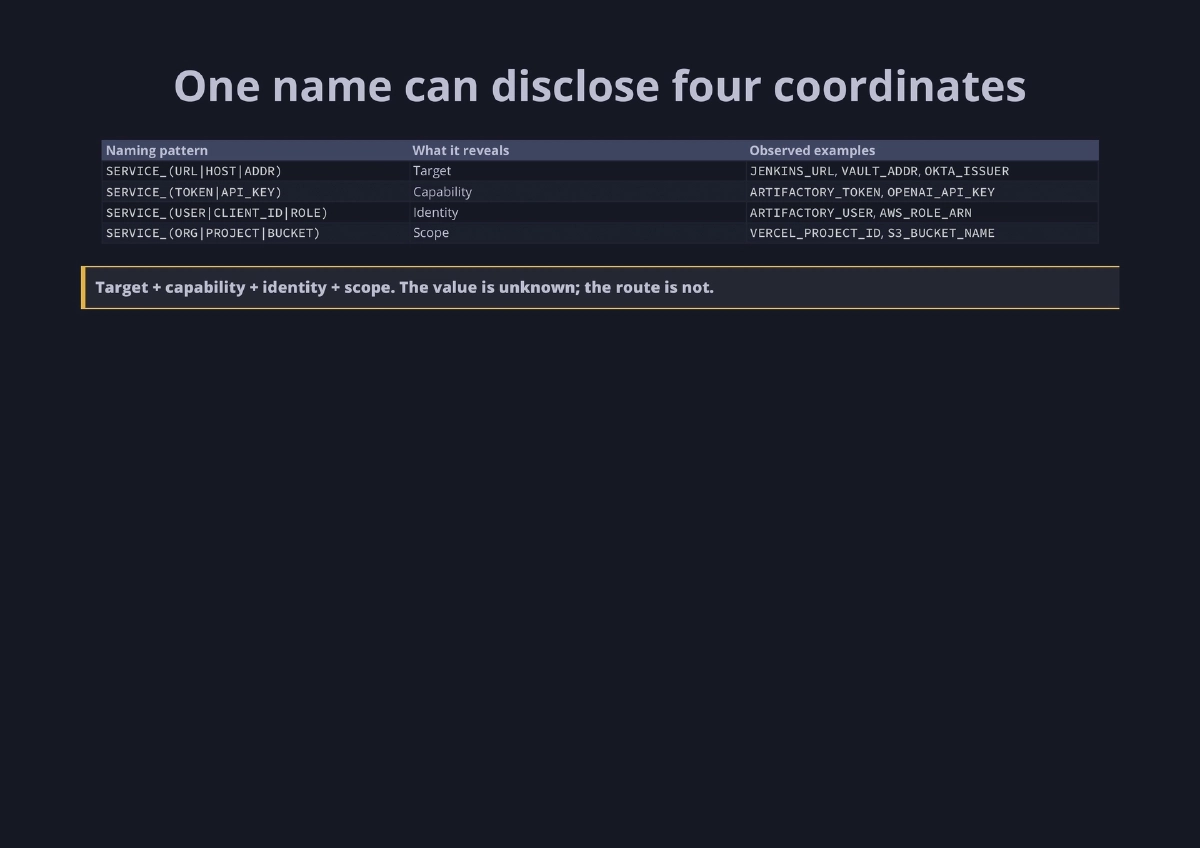
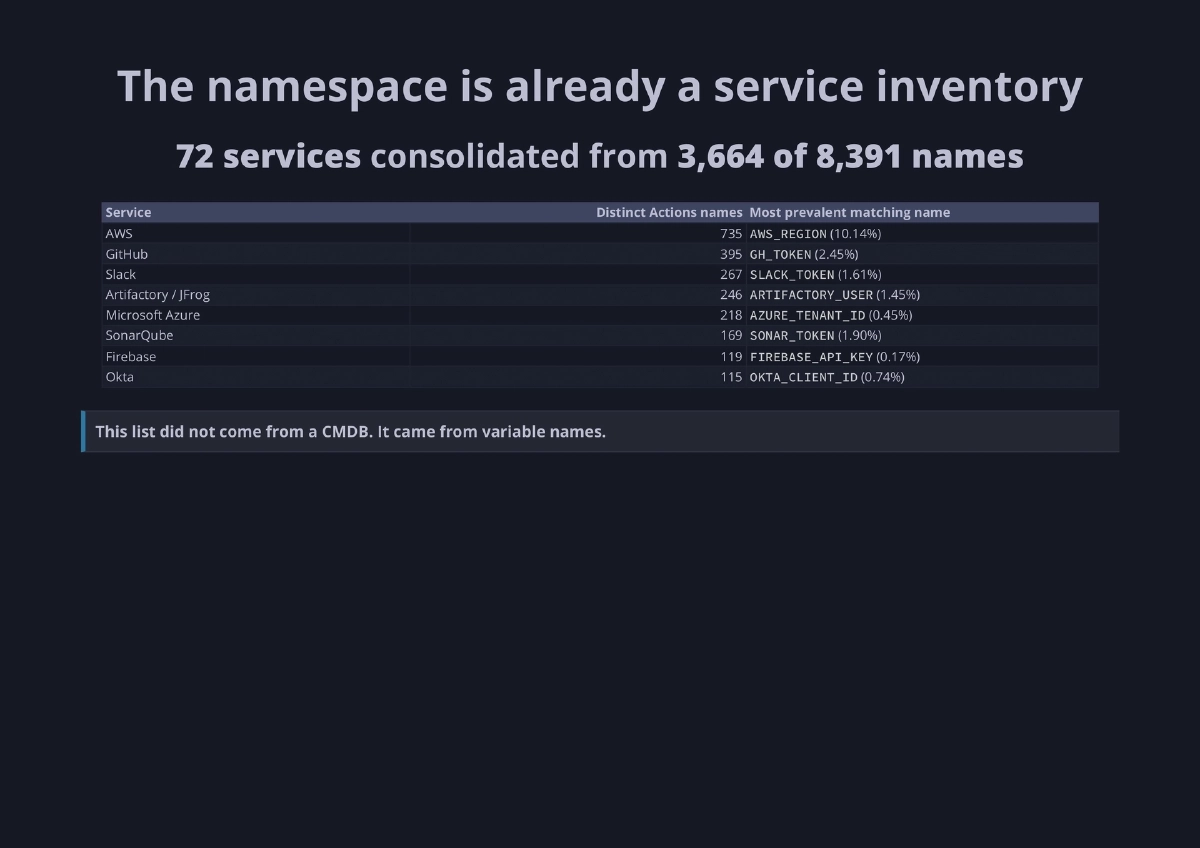
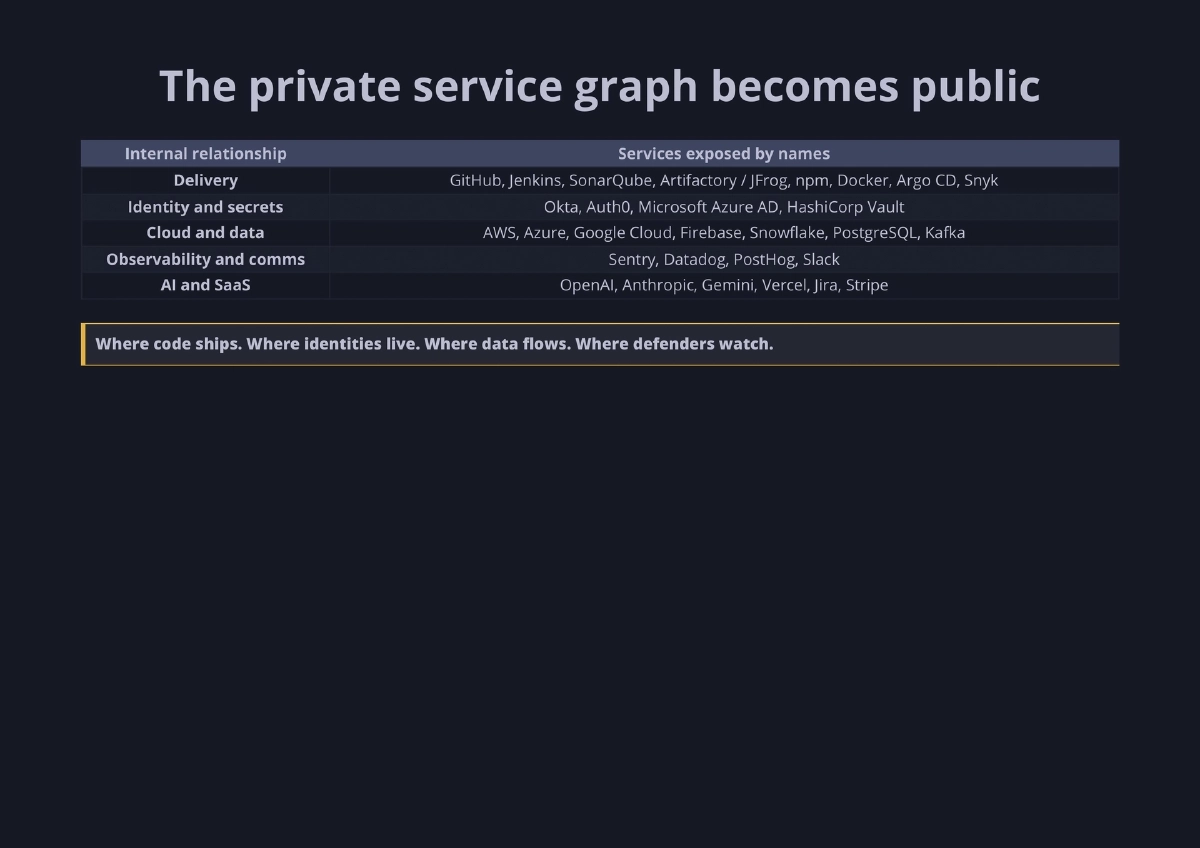
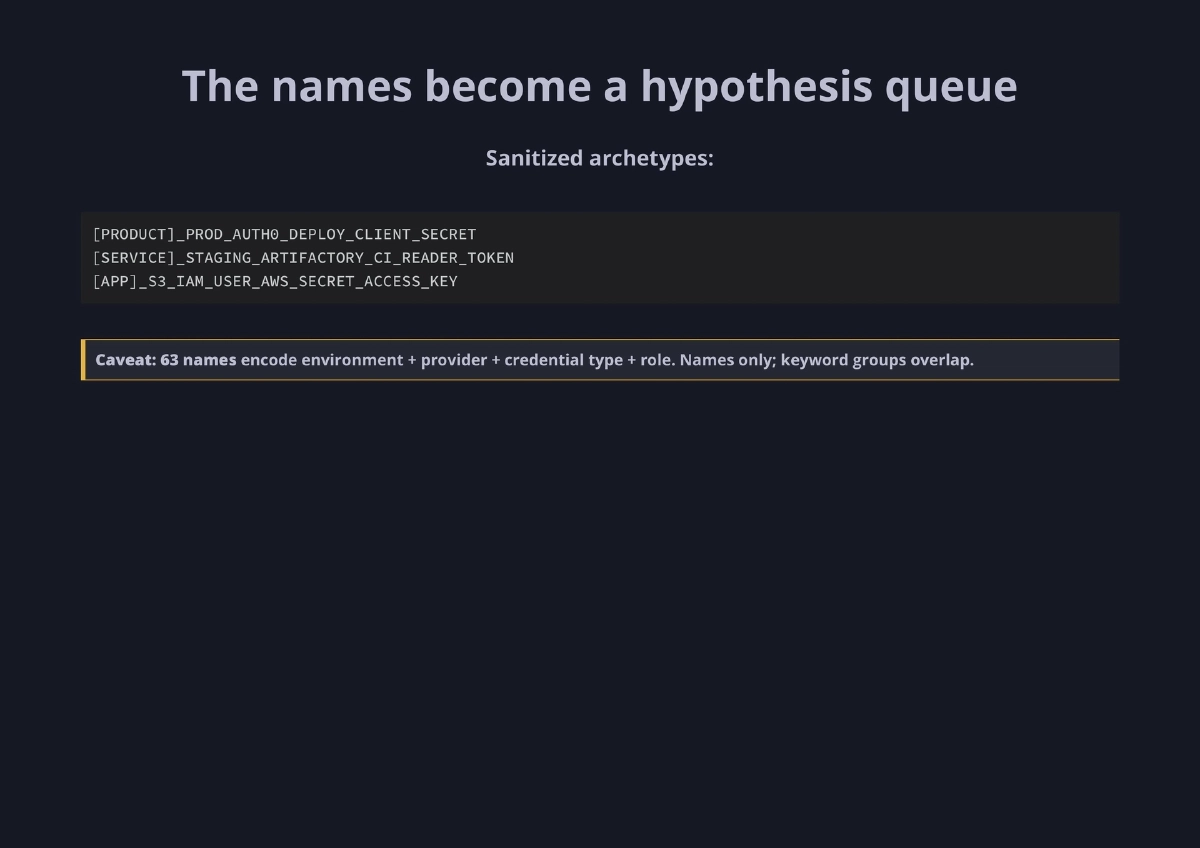
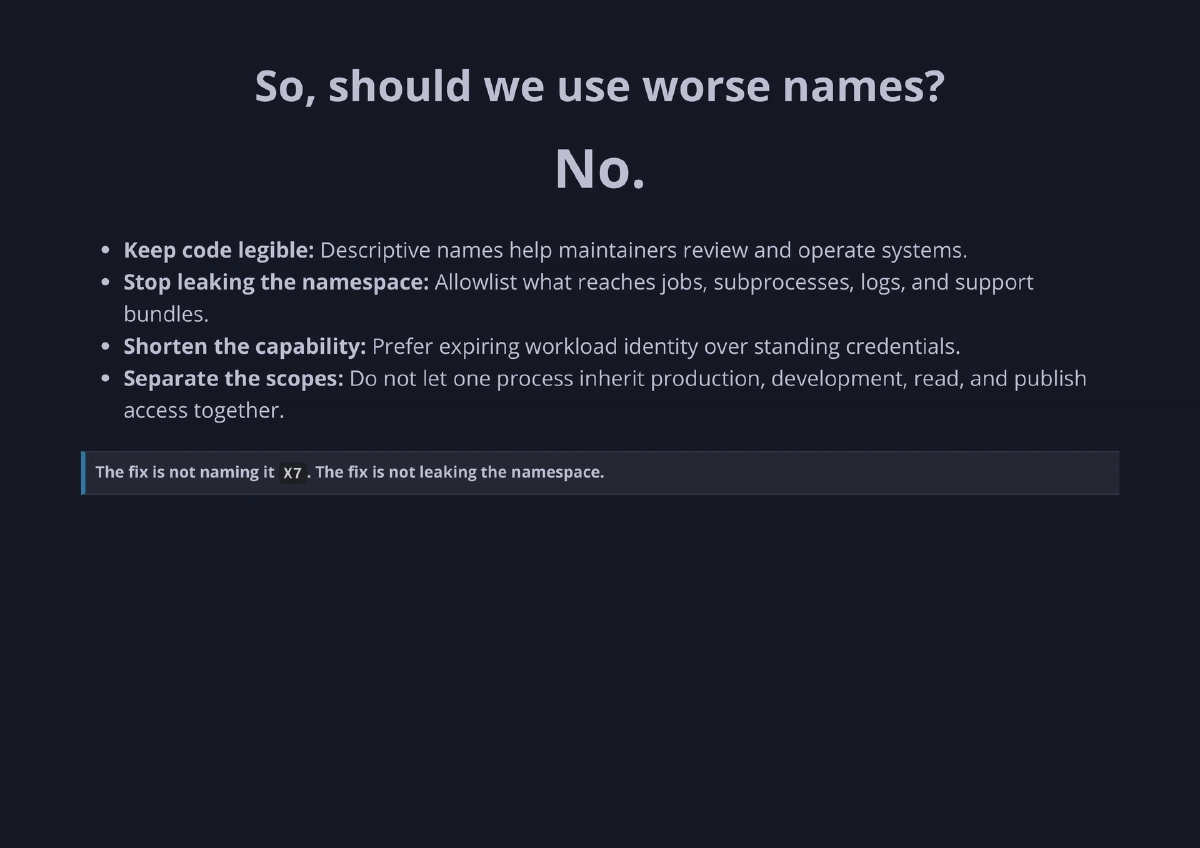
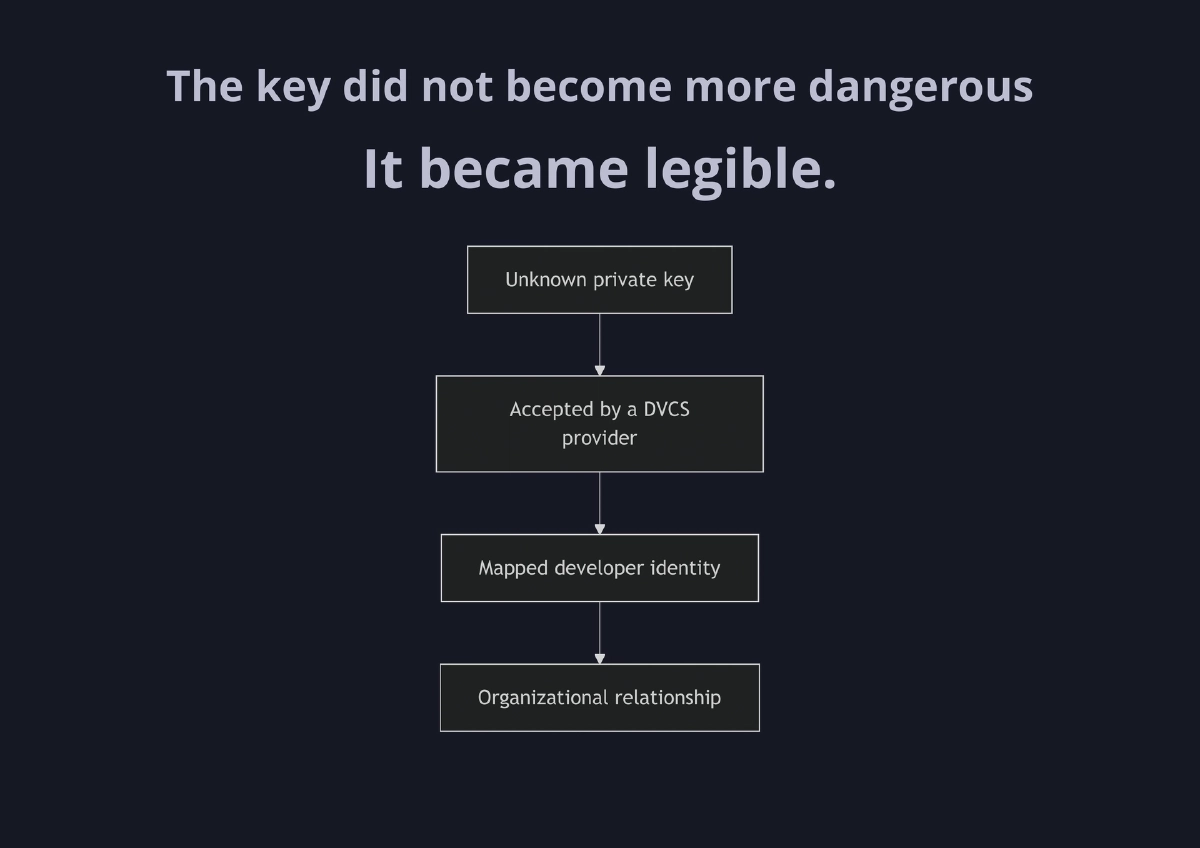
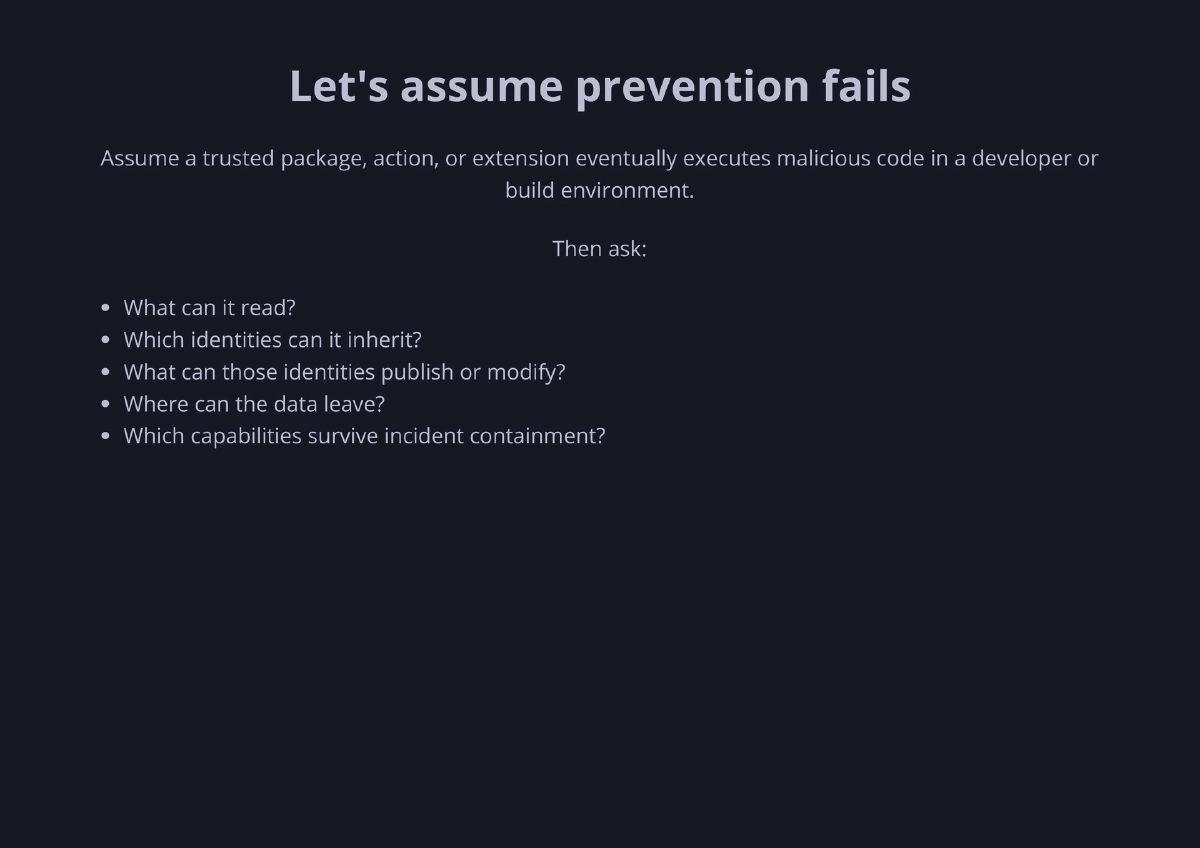
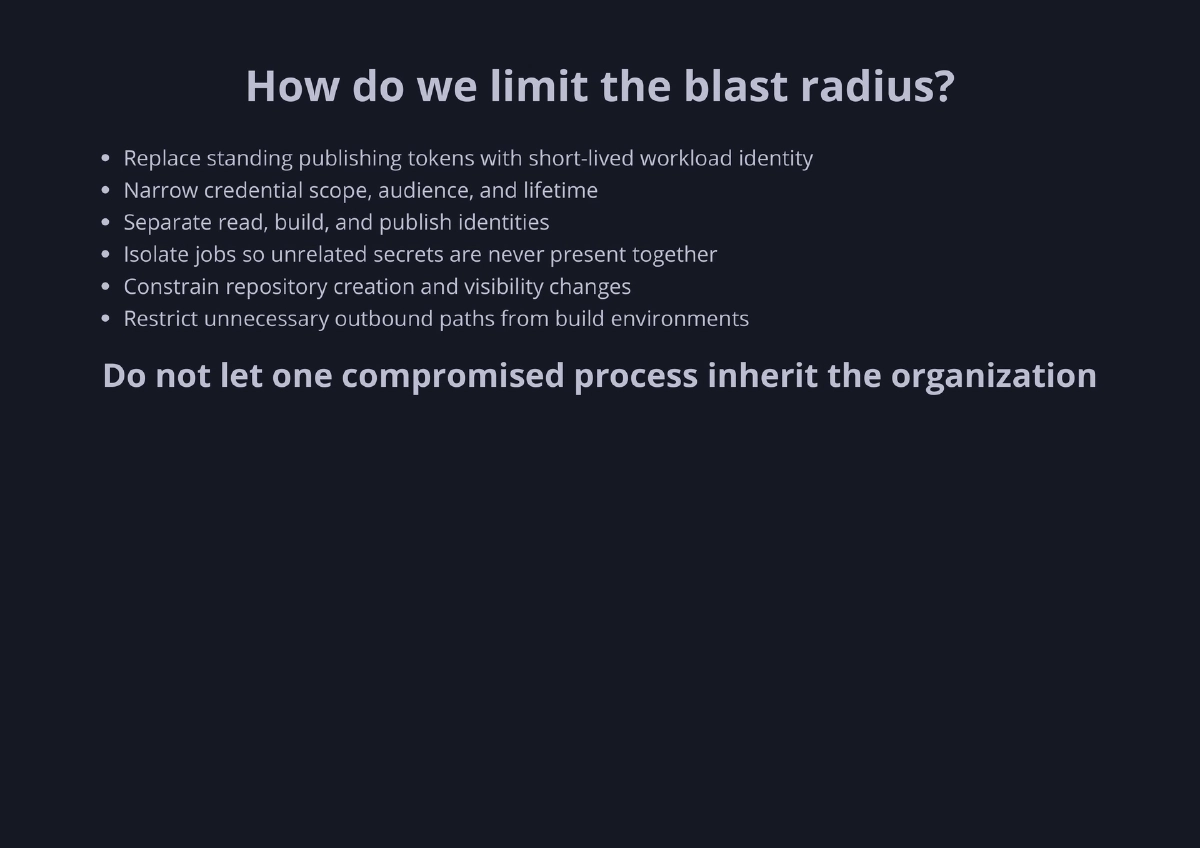
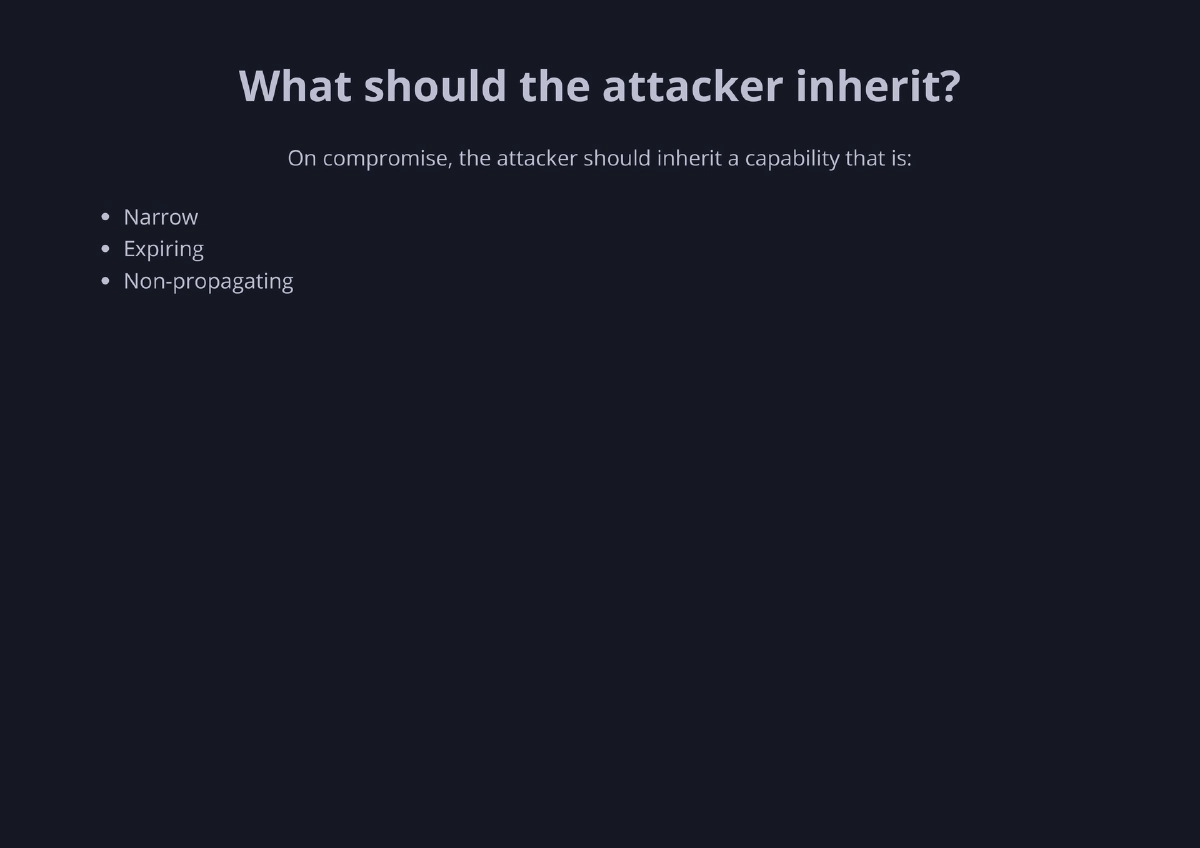
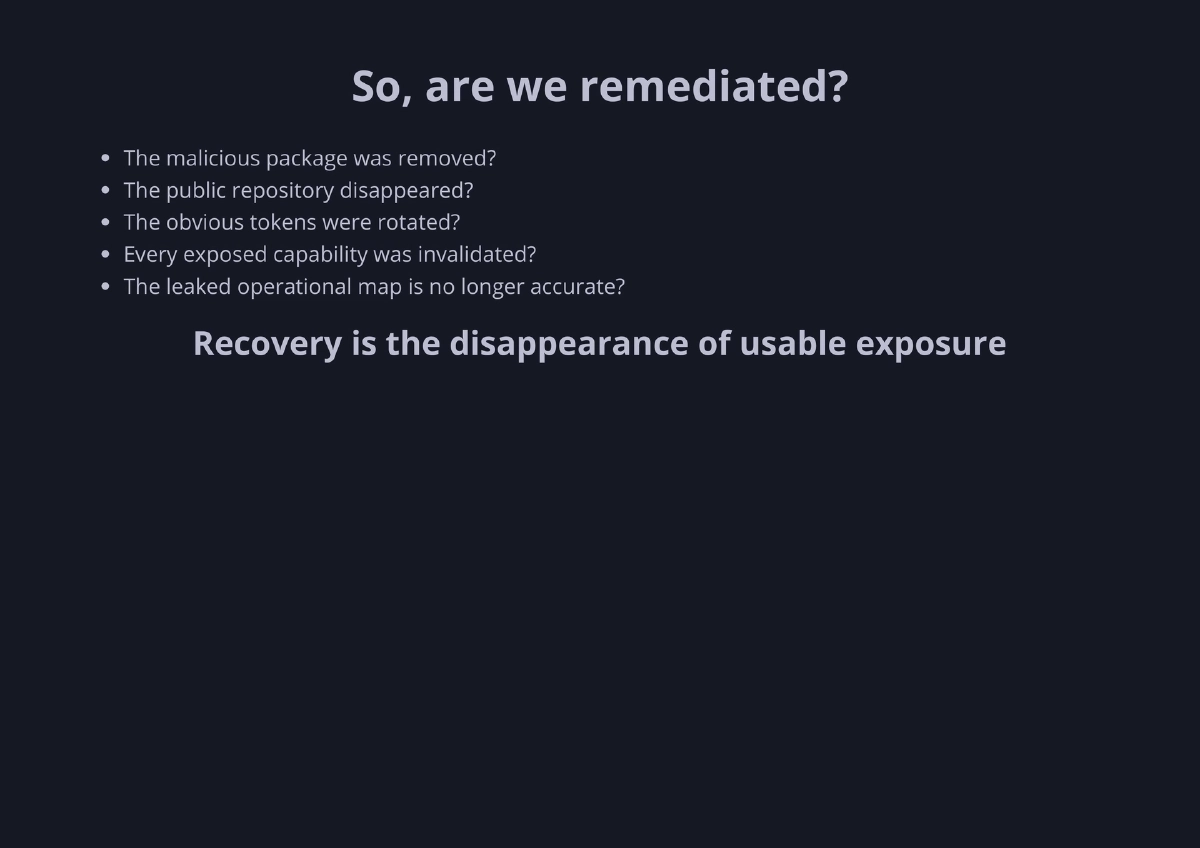
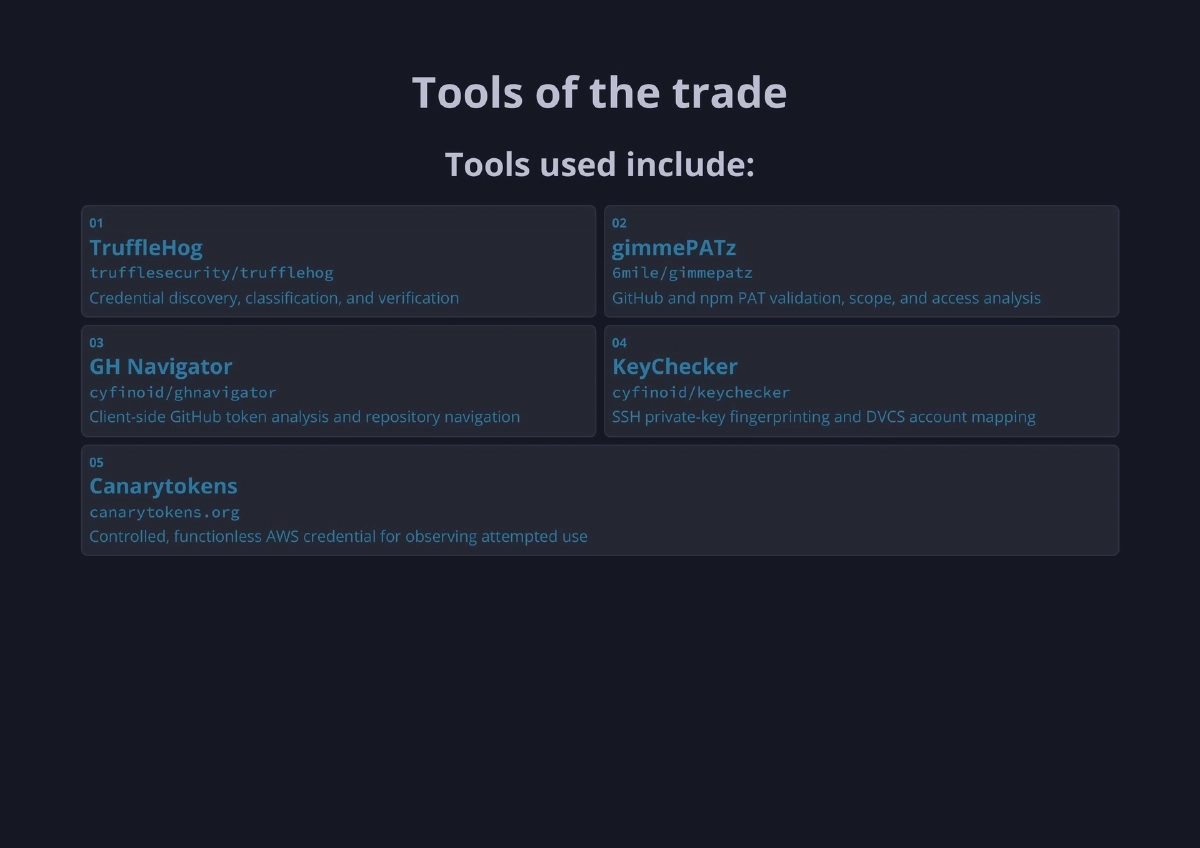
The close converts context into reconnaissance. One breach runs two clocks, a credential clock and a context clock. Variable names encode environment, provider, operation, and credential type; across 8,391 distinct GitHub Actions names, 72 services consolidate out of 3,664 names, an inventory the deck stresses did not come from a CMDB. On worse names the answer is no: keep names legible, stop leaking the namespace, shorten the capability, separate the scopes; the key did not become more dangerous, it became legible. Assume prevention fails, then shrink blast radius with short-lived workload identity, separated scopes, and isolated jobs, so the attacker inherits narrow, expiring, non-propagating capabilities. Remediation is redefined: recovery is the disappearance of usable exposure, with TruffleHog, gimmePATz, GH Navigator, KeyChecker, and Canarytokens credited as the toolkit.
Key Themes
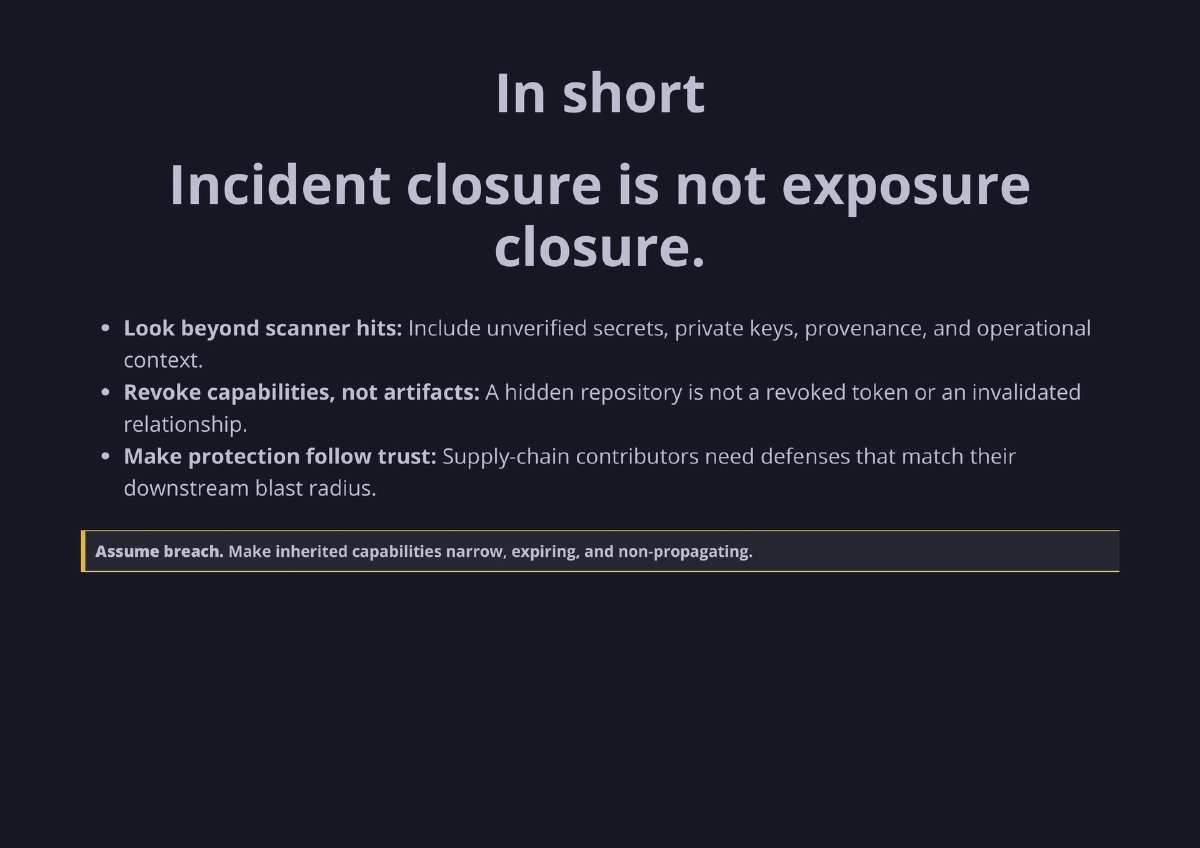
- The breach ends, the exposure does not: the worm was neutered while 23 of 30 wave-one GitHub tokens still worked, so recovery should be measured by usable exposure rather than ticket closure.
- A private repo is not a revoked token: in almost all cases a Shai-hulud repository simply went private, and removing or hiding the public artifact reduces visibility without invalidating anything inside it.
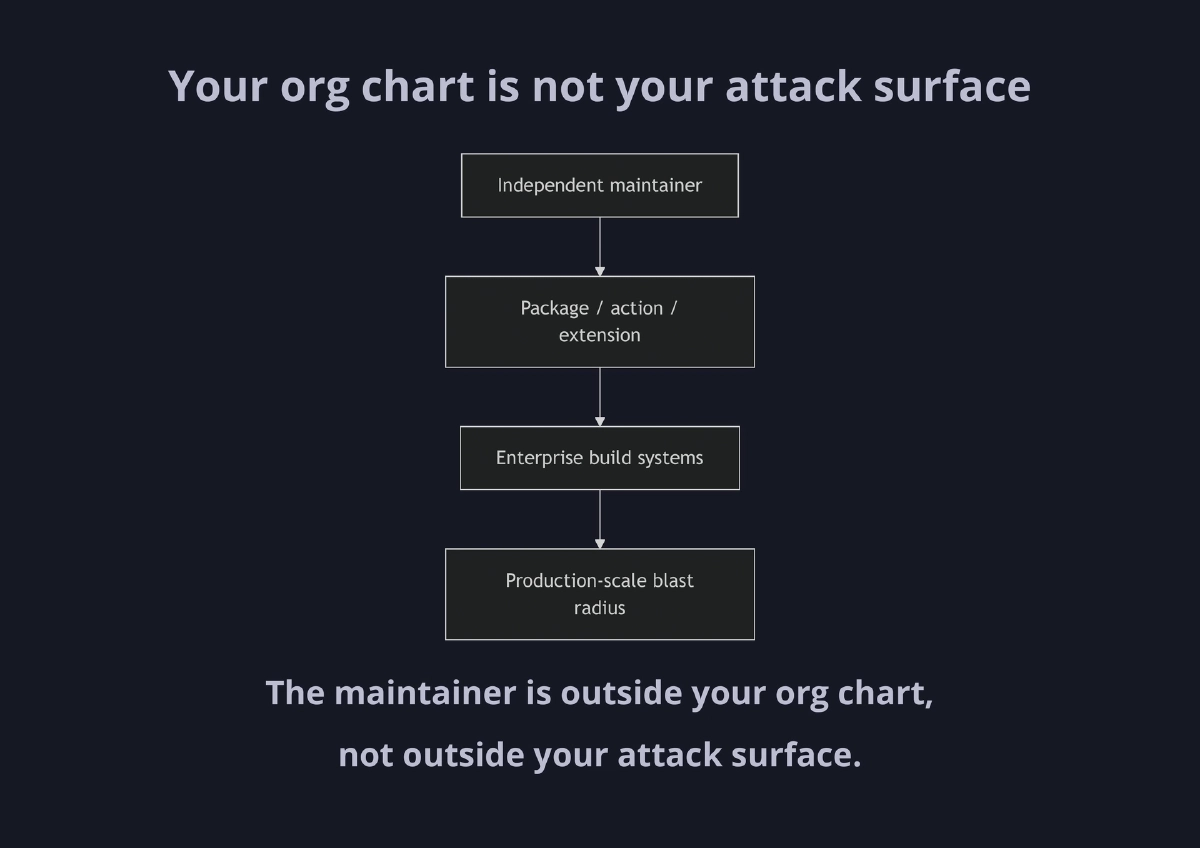
- Trust offloaded, protection limited: enterprise software increasingly trusts personal identities with production-scale blast radius while platform defenses stop at the account boundary, so the mismatch between trust and protection is the real weak point.
- The long tail of secret classes: 51.7% of 147 classes hold 99 or fewer findings and together contribute 1.39% of findings, and these unfamiliar classes are exactly the ones scanners and responders handle worst.
- SSH keys as working repository access: generic scanner findings turn into mapped accounts and repository access on DVCS hosts, with zero password-protected keys in the checked corpus.
- Context outlives credentials: names, paths, and service identifiers form a two-clock problem in which the context clock keeps running after the credential clock stops.
- Harvesting is automated and continuous: non-browser tooling generated most canary interactions and probing continued for 137 days across dozens of infrastructure sources.
- Blast radius by design: short-lived workload identity, separated scopes, and isolated jobs make whatever an attacker inherits narrow, expiring, and non-propagating.
Notable Points
- Shai Hulud 1 corpus: 35 repositories captured, 30 GitHub tokens identified, 23 GitHub tokens still active.
- Combined Shai Hulud 1 and Shai Hulud 2 corpus (August 2026): 147 secret classes, 156,257 findings; 51.7% of classes have 99 or fewer findings and the long tail contributes 1.39% of findings.
- SSH deduplication: 538,009 raw files, 5,240 unique by exact bytes (532,769 identical copies removed), 5,171 distinct by fingerprint.
- KeyChecker mapping of 5,171 fingerprint-unique keys: 96 GitHub accounts, 12 GitLab accounts, 2 Hugging Face accounts, 48 GitHub deployment keys, 0 password-protected keys, 110 known unique accounts, 23 Bitbucket instances, with Bitbucket acceptances not disclosing usernames.
- Canary totals: 378 API interactions, 59 source IPs, 20 infrastructure countries, 137 days observed, courtesy of Canarytokens.org.
- Opening sequence on 2025-11-26 UTC: GetCallerIdentity at 07:44:46, DescribeInstances at +23 sec, ListFunctions20150331 at +24 sec, ListBuckets at +102 min; 41 of 59 source IPs opened with GetCallerIdentity and 127 of 378 interactions asked the same question.
- Question timeline over the observation window: day 0 identity and inventory, day 3.6 Bedrock discovery, day 17.9 credential chaining, day 62.1 first invocation wave, day 136.8 secrets plus SSM sweep, spanning 47 distinct AWS API operations.
- User agents: 92.3% of interactions (349 of 378) carried non-browser tooling, led by Boto3 at 128 and TruffleHog at 90, with Python urllib at 42 and AWS CLI at 31; 76.2% of traffic came from hosting or cloud networks against 23.8% from ISP networks.
- Namespace math: 8,391 distinct GitHub Actions names, with AWS_SECRET_ACCESS_KEY (6.13%) and JENKINS_URL (5.20%) heading the route-revealing list, and 72 services consolidated from 3,664 of those names.
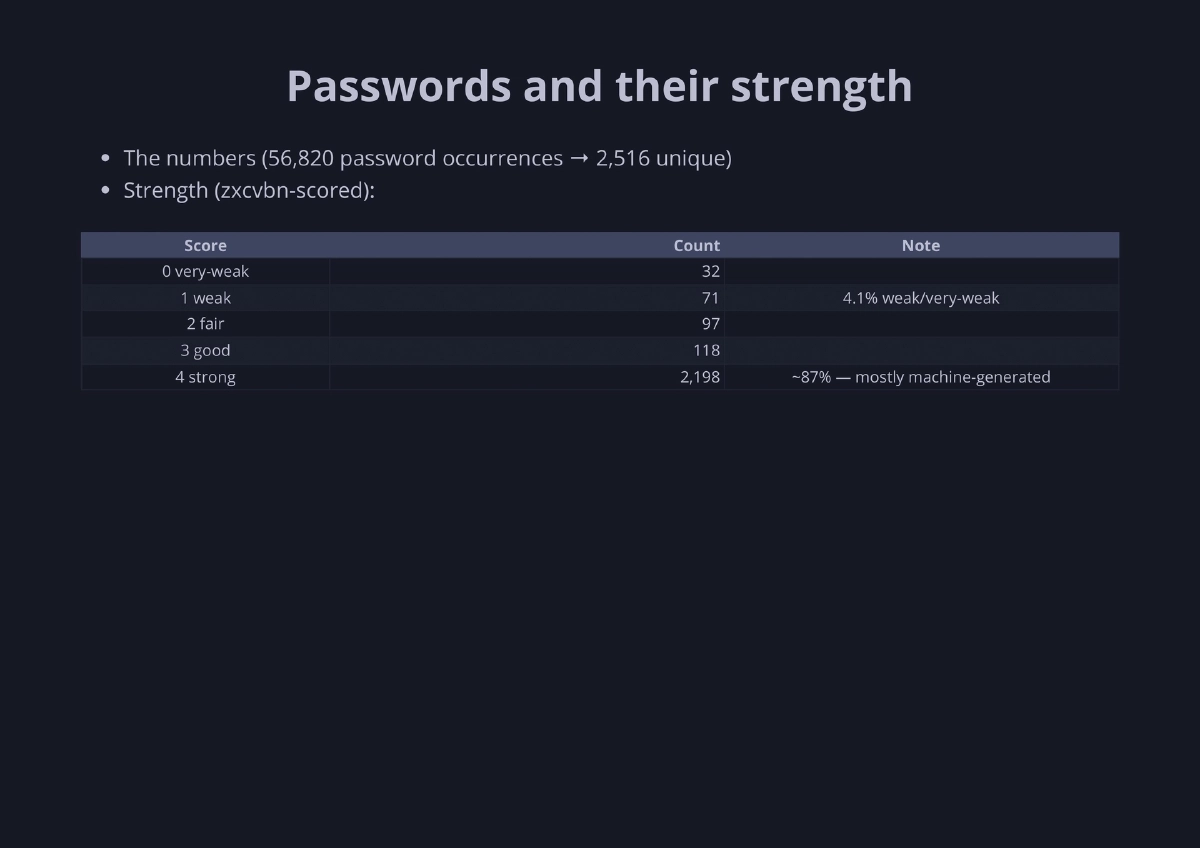
- Password data point: 56,820 password occurrences reducing to 2,516 unique values, zxcvbn-scored, with 4.1% weak or very weak and about 87% mostly machine-generated.
Notable Quotes
“Incident closure is not exposure closure.”
“The maintainer is outside your org chart, not outside your attack surface.”
“The contributor is not the weakest link. The mismatch between trust and protection is.”
“First validate identity. Then inventory the account.”
“The value is the capability. The name is the routing label.”
“This list did not come from a CMDB. It came from variable names.”
“The fix is not naming it X7. The fix is not leaking the namespace.”
“Recovery is the disappearance of usable exposure”