Android Tamer Clubhack
AI Generated Summary
AI Generated Content Disclaimer
Note: This summary is AI-generated and may contain inaccuracies, errors, or omissions. If you spot any issues, please contact the site owner for corrections. Errors or omissions are unintended.
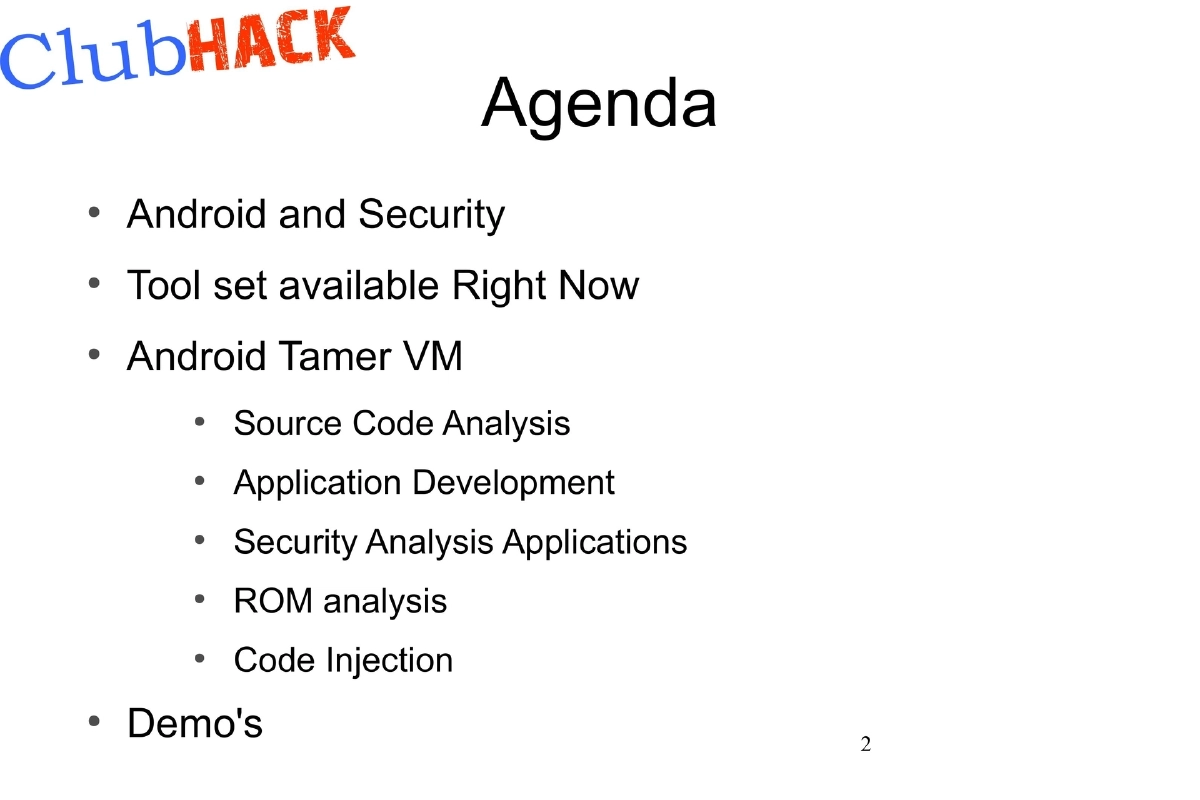
The ClubHack 2011 session on Android Tamer presents a virtual machine environment built as a one-stop toolkit for Android security operations. The deck frames why Android security work needed a consolidated toolkit, introduces the Tamer VM and its design decisions, walks through the bundled tools by category, and lays out the project’s plans after launch.
Summary
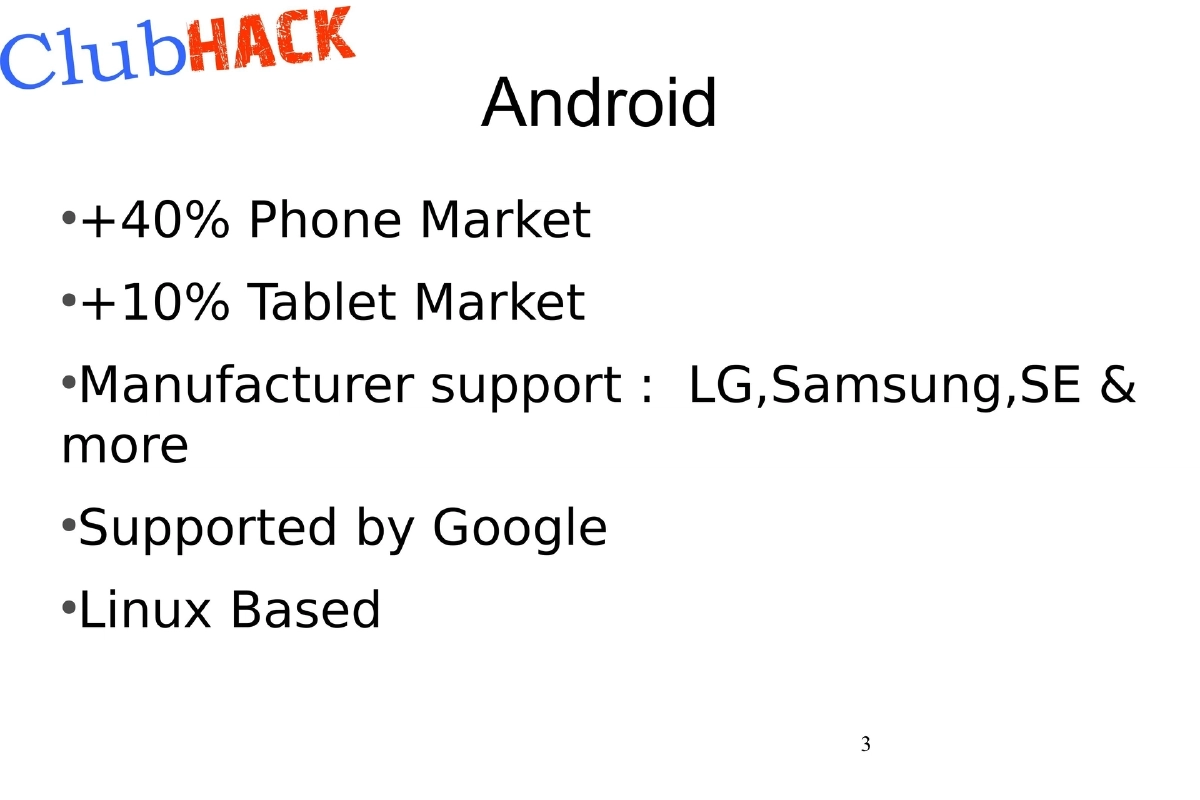
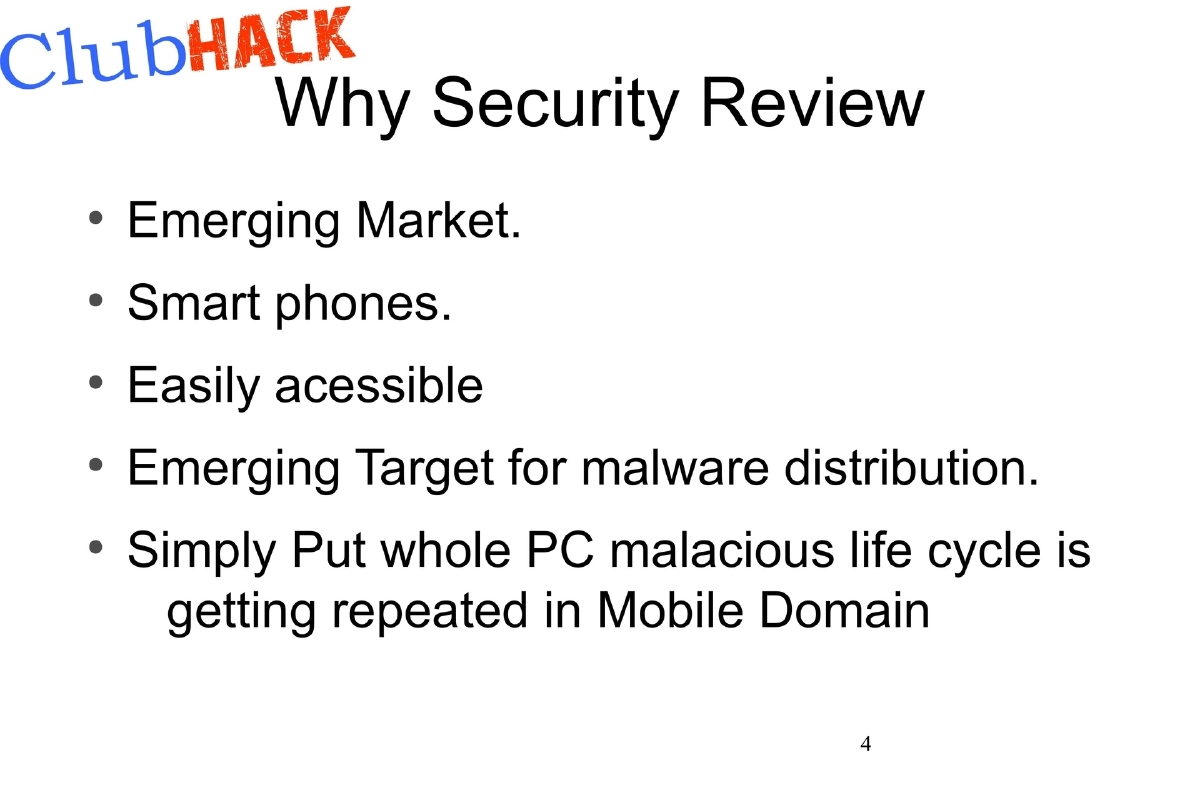
The deck opens with the market context that made Android security work urgent. Android held over 40 percent of the phone market and over 10 percent of the tablet market, with manufacturer support from LG, Samsung, SE and more, backing from Google, and a Linux base. Corporate integration needs were growing, and the PC malicious lifecycle was, as the deck puts it, being repeated in the mobile domain: smartphones were an emerging target for malware distribution.
Against that backdrop the deck laid out the workflow problem. Security professionals needed the SDK, the NDK, a proxy, decompilers and more, set up tool by tool on every machine, with still no standards. OWASP was working on mobile security standards, but practitioners also needed a toolkit, in the deck’s words a BT style toolkit for Android. The answer presented was Android Tamer, a VMware based virtual machine positioned as that missing toolkit.
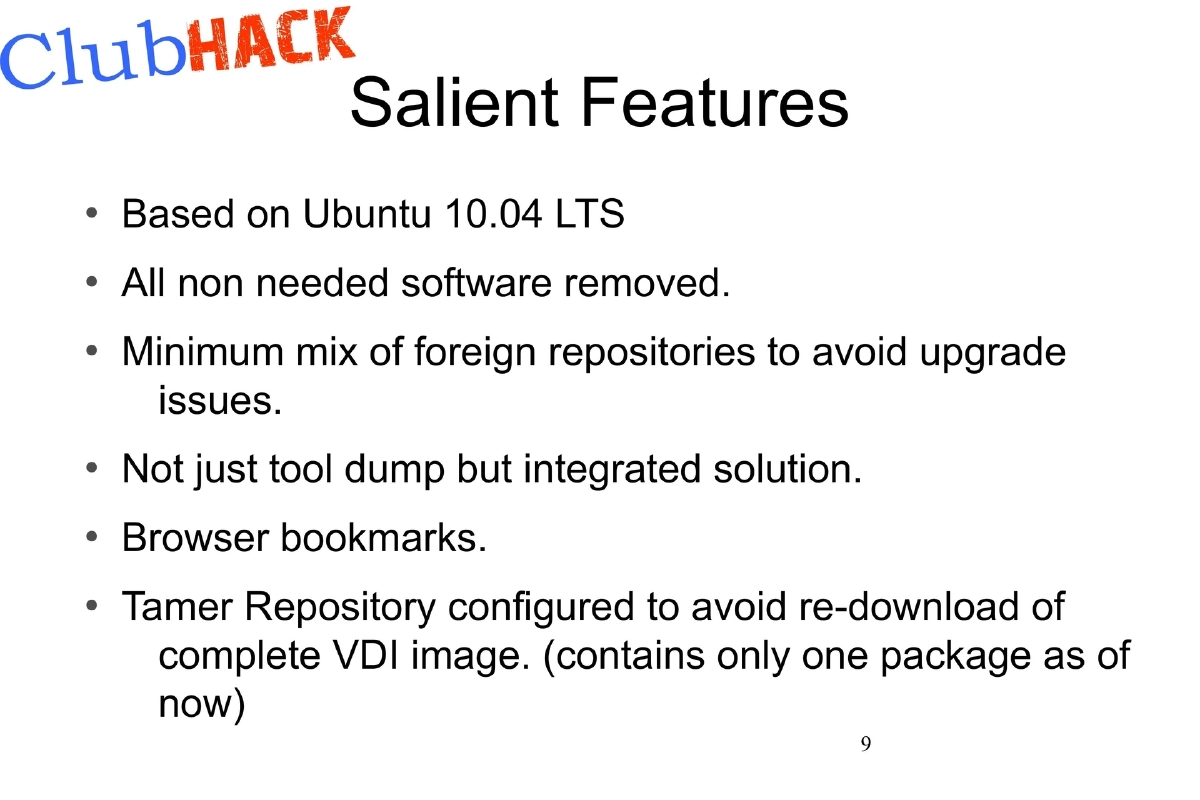
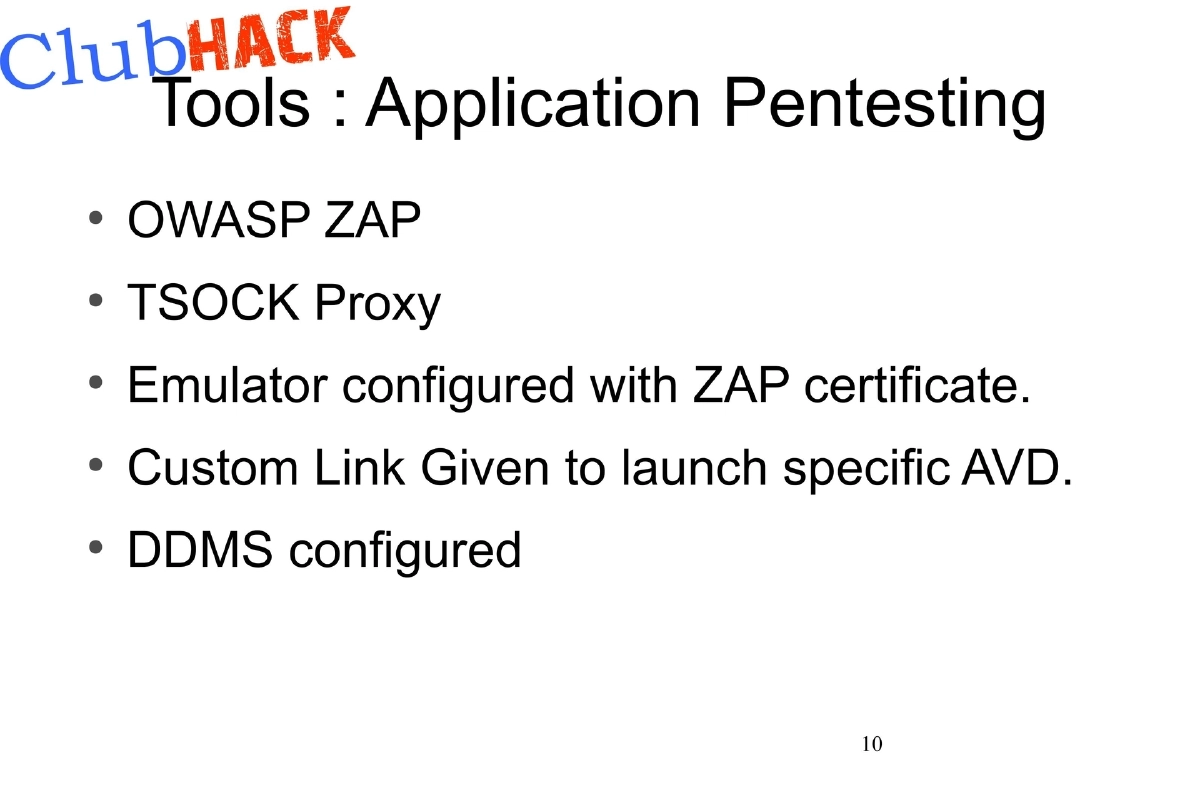
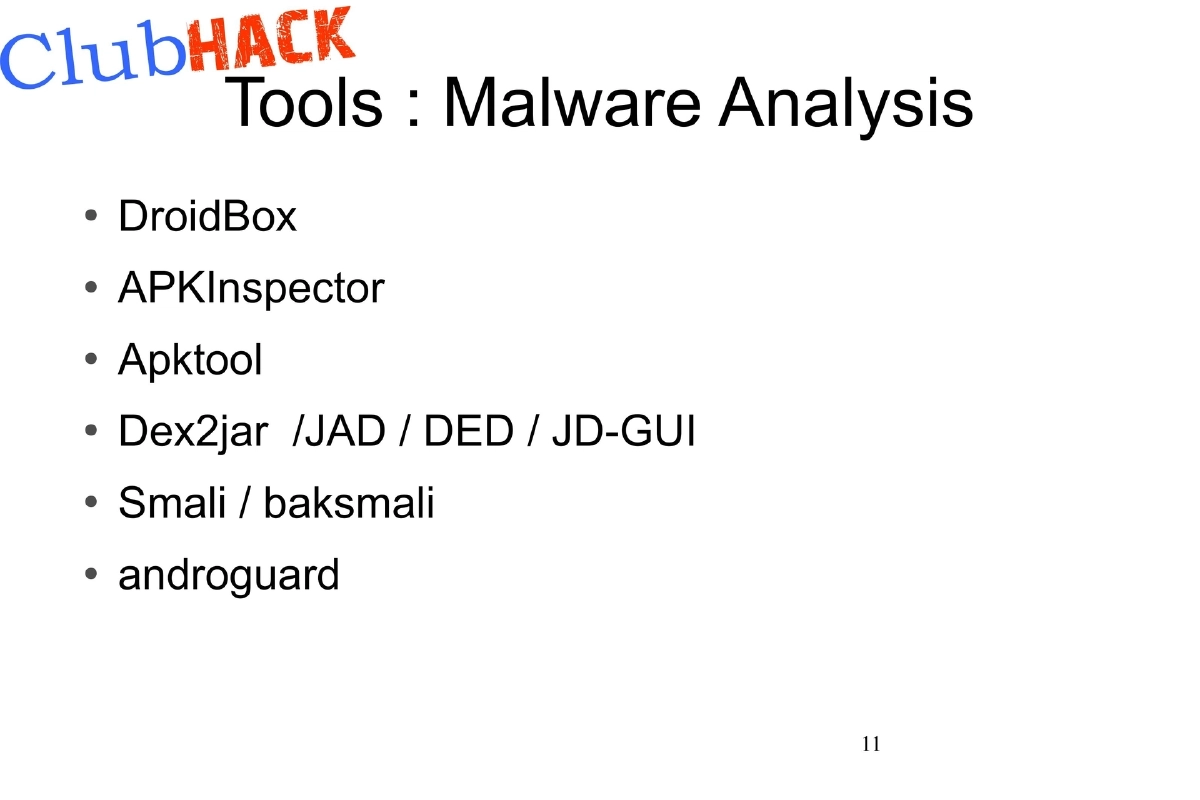
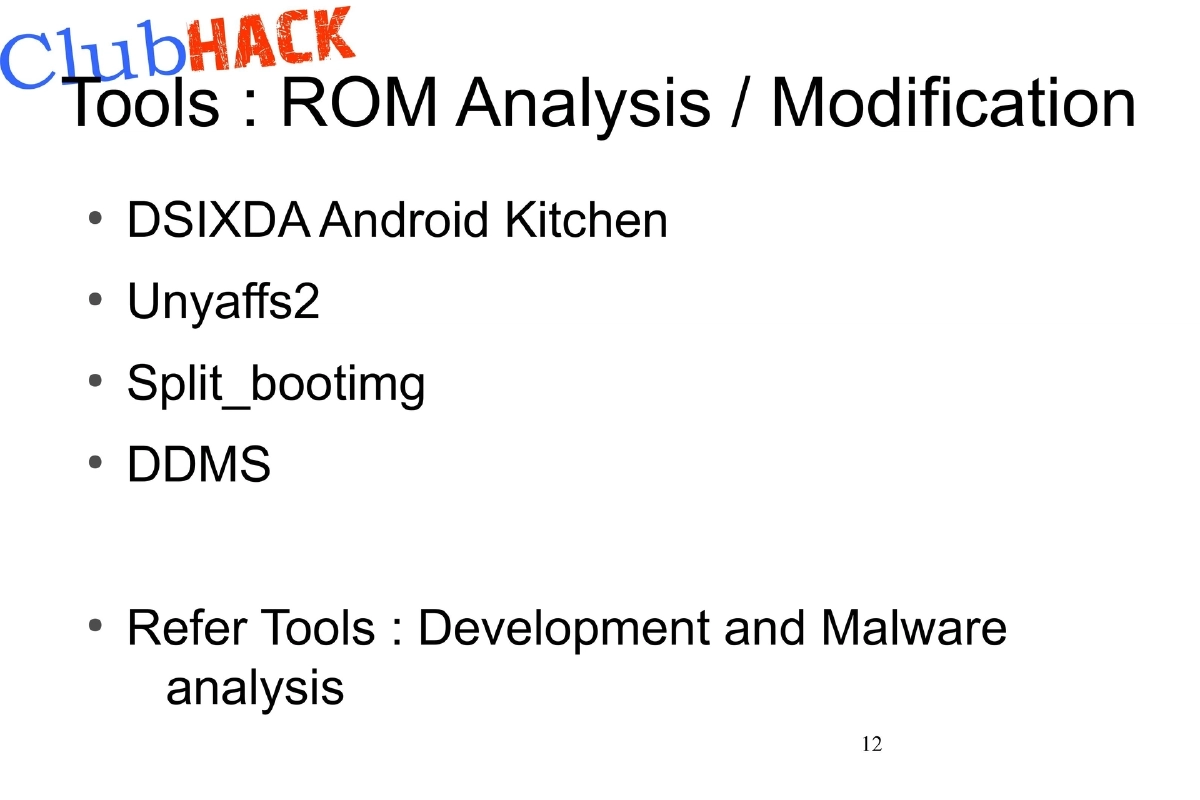
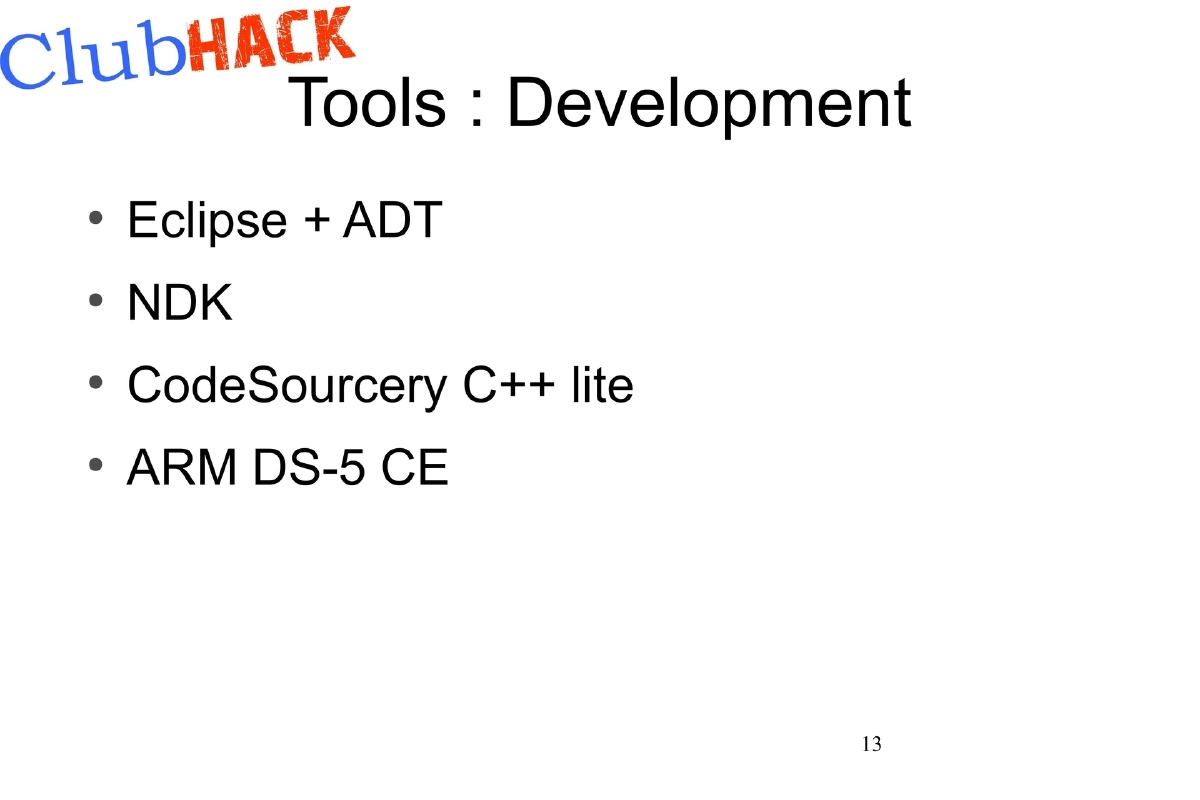
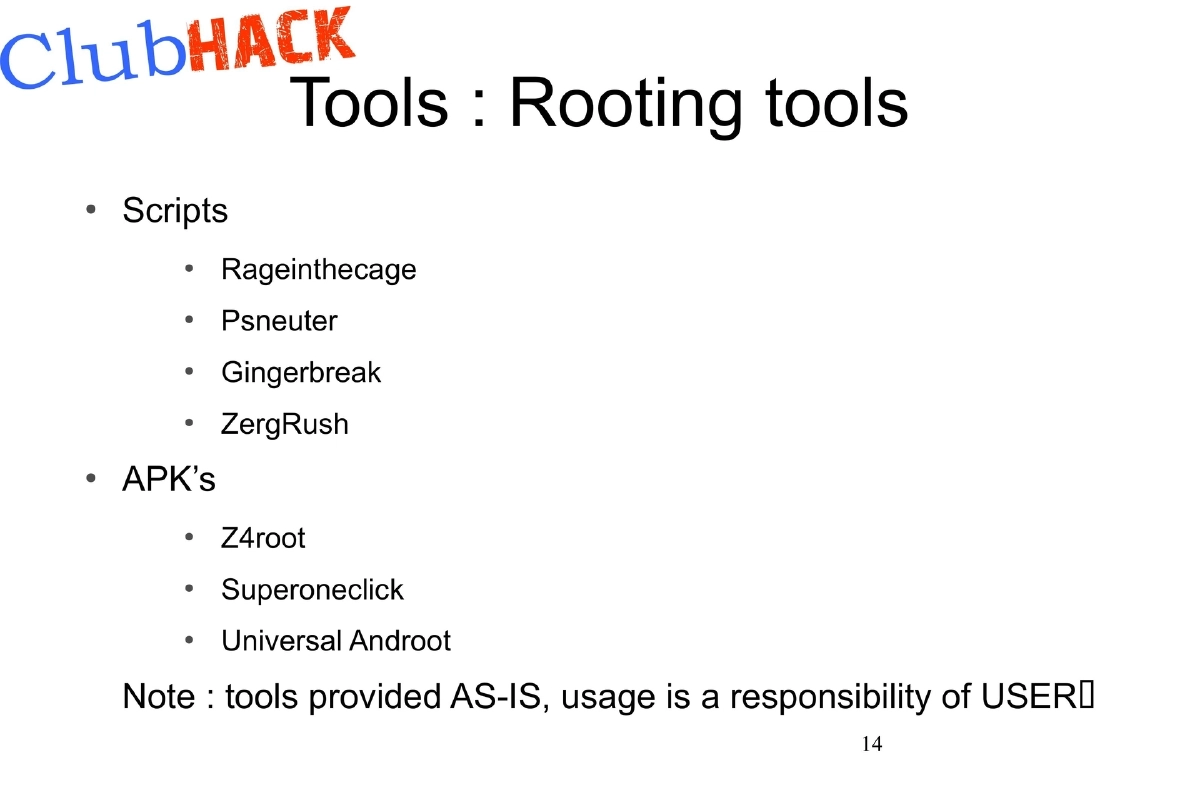
The VM’s salient features followed. It is based on Ubuntu 10.04 LTS with all non-needed software removed, keeps a minimum mix of foreign repositories to avoid upgrade issues, ships browser bookmarks, and configures the Tamer Repository so users can pull updates without re-downloading the complete VDI image. The deck stressed it is not just a tool dump but an integrated solution. The bundled tool tour covered five categories: application pentesting with OWASP ZAP, TSOCK Proxy, an emulator pre-configured with the ZAP certificate, a custom link to launch a specific AVD, and DDMS; malware analysis with DroidBox, APKInspector, Apktool, Dex2jar, JAD, DED, JD-GUI, Smali/Baksmali and Androguard; ROM analysis and modification with the DSIXDA Android Kitchen, Unyaffs2, Split_bootimg and DDMS; development with Eclipse plus ADT, the NDK, CodeSourcery C++ lite and ARM DS-5 CE; and rooting tools including the scripts Rageinthecage, Psneuter, Gingerbreak and ZergRush, plus APKs Z4root, Superoneclick and Universal Androot, with a note that the tools are provided AS-IS and usage is the user’s responsibility.
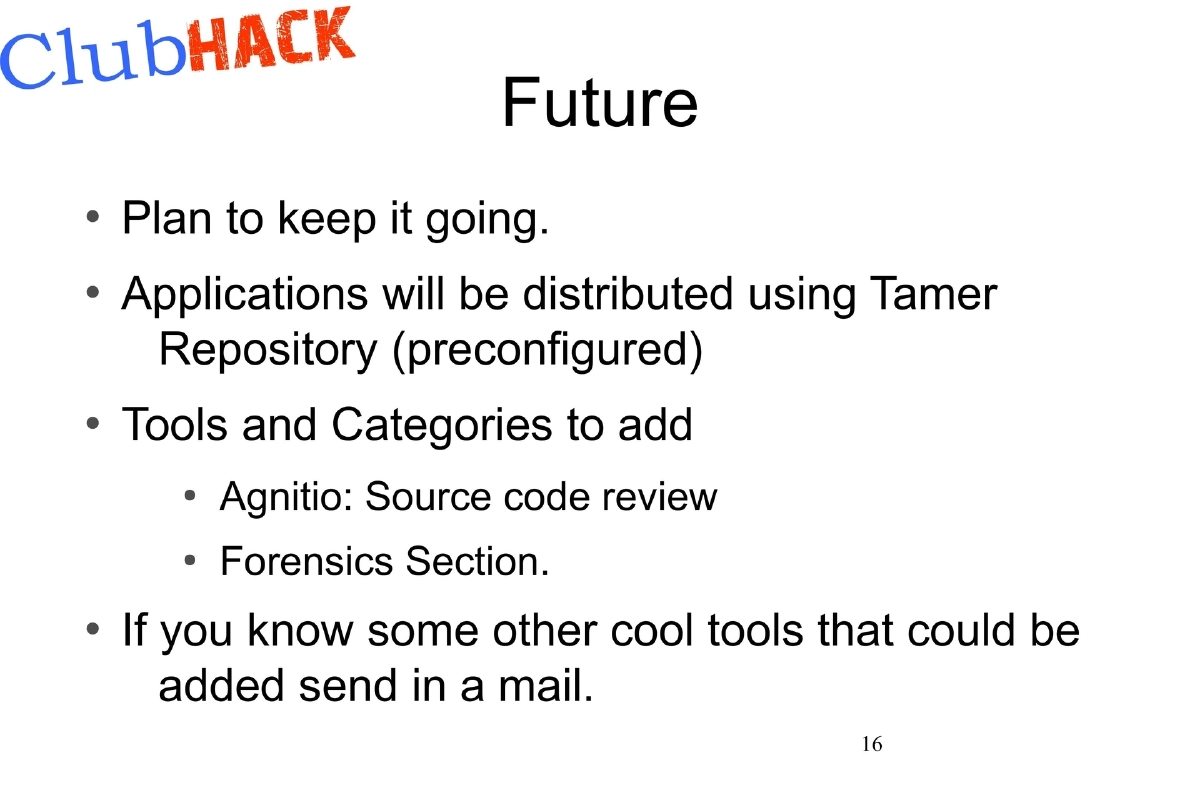
The session closed with the roadmap: keep the project going, distribute applications through the pre-configured Tamer Repository, add Agnitio for source code review and a forensics section, and take tool suggestions by mail. The project lives at sourceforge.net/p/androidtamer, and transparent socket proxying with a pre-loaded root CA certificate was highlighted as the way to intercept non-browser application traffic without repeated proxy setup friction.
Key Themes
- A market worth attacking: Android’s 40 percent phone share, 10 percent tablet share, multiple manufacturers and Linux base made it an emerging target for malware distribution.
- The repeating lifecycle: the whole PC malicious lifecycle was getting repeated in the mobile domain, which is why security review of apps, ROMs and platforms matters.
- No standards, no toolkit: practitioners set up toolsets on every machine with no standards; OWASP was defining standards while a BackTrack style toolkit was still missing.
- An integrated VM, not a tool dump: Android Tamer packages pentesting, malware analysis, ROM work and development in one Ubuntu 10.04 LTS based image with non-essential software stripped out.
- Update-friendly design: minimal foreign repositories avoid upgrade breakage, and the configured Tamer Repository delivers tool updates without re-downloading the full VDI.
- Interception by default: a transparent socket proxy and a pre-loaded root CA certificate remove the usual friction of intercepting non-browser application traffic.
- Room to grow: repository-based distribution, Agnitio for source code review and a forensics section were named as the next additions.
Notable Points
- Android Tamer is a VMware based virtual machine, first presented at ClubHack 2011, hosted at sourceforge.net/p/androidtamer/.
- The base image is Ubuntu 10.04 LTS with all non-needed software removed.
- Application pentesting tools: OWASP ZAP, TSOCK Proxy, an emulator configured with the ZAP certificate, a custom link to launch a specific AVD, and DDMS.
- Malware analysis tools: DroidBox, APKInspector, Apktool, Dex2jar, JAD, DED, JD-GUI, Smali/Baksmali, and Androguard.
- ROM analysis and modification tools: DSIXDA Android Kitchen, Unyaffs2, Split_bootimg, and DDMS.
- Development tools: Eclipse with ADT, the NDK, CodeSourcery C++ lite, and ARM DS-5 CE.
- Rooting tools ship as scripts (Rageinthecage, Psneuter, Gingerbreak, ZergRush) and APKs (Z4root, Superoneclick, Universal Androot), provided AS-IS.
- The Tamer Repository was configured in the VM to distribute updates, containing only one package at launch.
- The VM covers five use cases: application pentesting, malware analysis, ROM modification (core plus kernel), ROM analysis, and app/malware/native code development.
- Agnitio for source code review and a forensics section were planned as future additions, with community tool suggestions invited by mail.
Notable Quotes
“Simply Put whole PC malacious life cycle is getting repeated in Mobile Domain”
“Setup toolset on every machine and still no standards.”
“Basically we need BT style toolkit for android.”
“Not just tool dump but integrated solution.”
“Minimum mix of foreign repositories to avoid upgrade issues.”
“tools provided AS-IS, usage is a responsibility of USER”